Choosing the right cart in 2026 requires more than comparing speed, color, and price. Electric Golf Carts now serve resorts, private communities, farms, campuses, warehouses, and family properties worldwide. Each setting demands a different balance of range, load capacity, comfort, charging access, and maintenance support.
This guide examines the leading electric cart types for global buyers. It will compare two-seat, four-seat, six-seat, utility, lifted, and street-oriented configurations. It will also explain battery choices, including lithium-ion and lead-acid systems, with attention to charging time, service life, weight, and operating conditions. A cart used beside a coastal resort may face salt air, while one working on a farm may carry tools across uneven ground. Those details matter.
No single model is best for every buyer. That sounds obvious. Yet many purchasing decisions still begin with appearance rather than duty requirements. A reliable evaluation should consider terrain, passenger frequency, cargo weight, climate, replacement parts, warranty terms, and local approval requirements. Product specifications can also vary between manufacturers, so independent verification is important. This overview draws on practical selection principles and current industry trends, while recognizing that technology and regional availability continue to change. Some comparisons may remain imperfect because battery performance depends on temperature, maintenance, driving habits, and load. Buyers should treat published range as a reference, not a promise. The most suitable Electric Golf Carts are those that match real daily use, long-term operating costs, and dependable support after purchase.
What Defines an Electric Golf Cart in 2026
An electric golf cart in 2026 is more than a quiet vehicle for short trips. It combines battery power, controlled speed, practical comfort, and responsible energy use. Most models use lithium-based batteries, although some buyers still choose older battery systems for lower purchase costs. Battery capacity, charging time, and replacement access matter more than impressive range claims. A cart traveling over smooth pavement may perform differently on grass, slopes, or uneven paths.
Modern carts often include regenerative braking, LED lighting, digital displays, and adjustable driving modes. These features should support safer operation, not create unnecessary complexity. Reliable brakes, clear controls, stable steering, and strong weather protection remain essential. Test it loaded. Four passengers and a small cargo box can reduce climbing performance noticeably. I have also found that a comfortable seat means little when suspension movement feels harsh.
Global buyers should examine local road rules, speed limits, lighting requirements, and approved operating areas before purchasing. Legal definitions vary between countries and even between municipalities. A technically advanced cart may still need specific safety equipment or registration. Serviceability is another practical definition in 2026. Buyers should ask about battery diagnostics, replacement parts, software support, and technician training. Connectivity sounds useful, but weak network coverage can make smart functions unreliable. That part deserves more honest testing.
Electric golf carts in 2026 are commonly differentiated by passenger capacity, practical driving range, and intended use. The comparison below reflects typical specification ranges for widely used electric cart configurations, excluding company and brand data.
Passenger carts prioritize seating capacity, while utility carts emphasize payload and worksite flexibility. Actual range varies with battery chemistry, terrain, load, speed, temperature, and operating conditions.
2026 Top Electric Golf Cart Types for Global Buyers
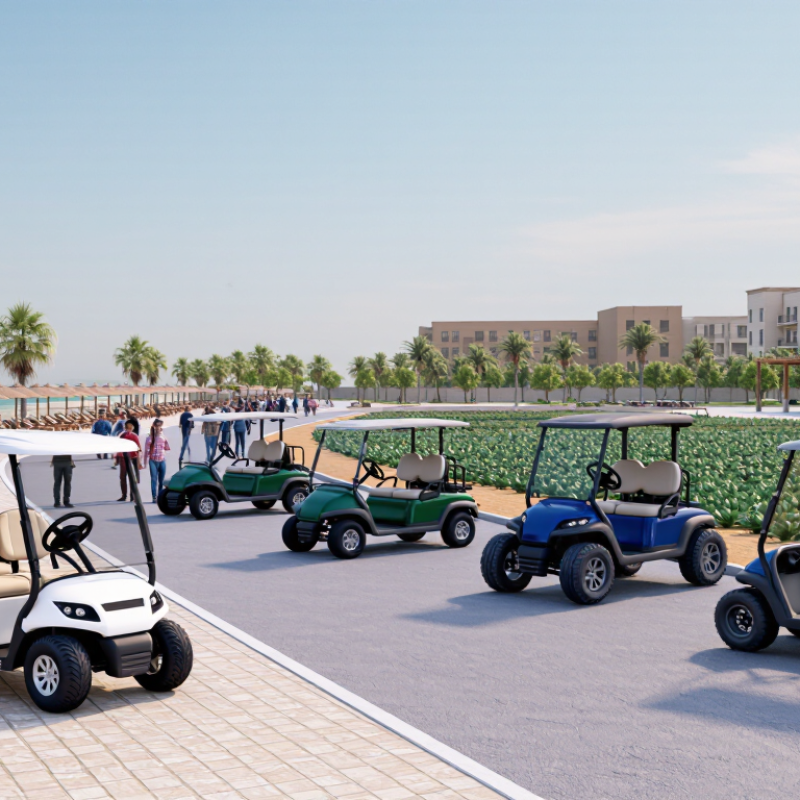
The main electric golf cart types serve different environments, not identical buyers. Neighborhood carts suit resorts, campuses, gated communities, and short urban trips. They usually carry two to six passengers and use compact frames. Utility carts add rear beds, enclosed boxes, or towing equipment. They fit farms, warehouses, maintenance teams, and construction sites. Payload matters more than appearance.
Shuttle carts move people between terminals, hotels, hospitals, and large venues. Their wider seats and stronger suspension support repeated daily use. Off-road recreational carts use higher ground clearance and stronger tires for uneven paths. However, buyers should not confuse recreational capability with road approval. The International Energy Agency reported that global electric car sales exceeded 17 million in 2024, showing wider battery acceptance, but golf cart batteries face different duty cycles and charging conditions.
MarketsandMarkets values the global golf cart market at about USD 1.7 billion in 2023 and forecasts continued growth through 2028. Grand View Research also identifies commercial fleets and tourism as important demand areas. These reports support careful type selection, not automatic purchasing. Lithium-ion systems reduce weight and charging time, while lead-acid systems can offer lower entry costs. The trade-off is easy to miss. A fleet operator should compare payload, slope, climate, service access, battery warranty, and local speed rules. Field inspections often reveal that a “standard” cart is too narrow, too weak, or poorly protected from rain. There is no perfect type. 天天彩票中奖
| Electric Golf Cart Type | Typical Seating | Common Battery Options | Typical Driving Range per Charge | Typical Maximum Speed | Best-Suited Applications | Terrain Capability | Key Purchasing Considerations |
|---|---|---|---|---|---|---|---|
| Two-Seat Standard Golf Cart | 2 passengers | Lead-acid or lithium-ion phosphate battery | 40–80 km, depending on battery capacity, load and terrain | 19–25 km/h | Golf courses, resorts, gated communities and private properties | Best on paved roads and well-maintained paths; suitable for moderate gradients | Compact dimensions, low operating cost and easy maneuverability are the main advantages |
| Four-Seat Rear-Facing Golf Cart | 4 passengers | Lead-acid or lithium-ion phosphate battery | 35–75 km, depending on passenger load and battery specification | 19–25 km/h | Family transport, resorts, hotels, residential communities and tourism facilities | Suitable for paved roads and light-duty unpaved surfaces | Rear-facing seats improve passenger capacity while retaining a relatively short vehicle length |
| Six-Seat Extended Golf Cart | 6 passengers | Lead-acid or lithium-ion phosphate battery | 30–65 km, depending on load, battery size and operating conditions | 19–25 km/h | Large resorts, campuses, airports, event venues and community transportation | Works best on paved routes and gentle slopes | Higher passenger capacity requires stronger suspension, larger brakes and careful attention to total vehicle weight |
| Utility Electric Golf Cart | 2–4 passengers, depending on configuration | Lead-acid or lithium-ion phosphate battery | 35–75 km, depending on cargo weight and battery capacity | 19–32 km/h | Maintenance operations, agriculture, campuses, warehouses and facility management | Suitable for paved roads, service lanes and light off-road work | Payload rating, cargo-bed size, braking performance and ground clearance are more important than seating capacity |
| Off-Road Electric Golf Cart | 2–6 passengers | High-capacity lithium-ion phosphate or deep-cycle lead-acid battery | 30–70 km, depending on terrain, tires and driving style | 19–40 km/h, subject to local regulations | Outdoor recreation, estates, farms, resorts and private off-road properties | Designed for uneven ground, inclines and loose surfaces; performance varies by motor and drivetrain | Look for higher ground clearance, all-terrain tires, reinforced suspension and an adequate motor rating |
| Street-Legal Low-Speed Electric Vehicle | 2–6 passengers | Usually lithium-ion phosphate or deep-cycle lead-acid battery | 50–120 km, depending on battery capacity, speed and legal equipment | 25–45 km/h, subject to national and local regulations | Public roads with low speed limits, residential areas, resorts and short-distance urban mobility | Primarily intended for paved roads and approved low-speed routes | Buyers must verify lighting, mirrors, seat belts, indicators, braking equipment, registration and road-use requirements |
| Lithium-Ion Electric Golf Cart | 2–8 passengers, depending on vehicle layout | Lithium-ion phosphate battery pack with a battery-management system | 60–150 km, depending on battery size, load, speed and terrain | 19–45 km/h, depending on vehicle classification | Frequent-use fleets, resorts, commercial facilities and buyers seeking lower routine maintenance | Available for paved, mixed-surface and selected off-road applications | Higher initial purchase cost is generally balanced by lower weight, faster charging capability and reduced routine battery maintenance |
| Lead-Acid Electric Golf Cart | 2–8 passengers, depending on vehicle layout | Flooded deep-cycle lead-acid or sealed AGM lead-acid battery | 30–80 km, depending on battery condition, load and terrain | 19–32 km/h | Cost-sensitive fleets, golf courses, private properties and occasional-use applications | Suitable for normal paved routes and moderate-duty operation | Lower purchase cost is a major benefit; buyers should account for heavier weight, longer charging and replacement battery handling |
In 2026, global buyers will compare electric golf cart types by battery system before appearance. Passenger, utility, and course models have different energy demands. Common choices include flooded lead-acid, sealed AGM, and lithium-ion packs. Lead-acid usually costs less, but it is heavier and needs regular water checks. AGM reduces maintenance, although replacement costs can still surprise owners. Lithium-ion provides lighter weight, steadier voltage, and quicker charging. It also requires a properly matched battery-management system. Cheap compatibility shortcuts are risky.
Range depends on more than the battery label. A cart carrying four adults on wet grass uses far more energy than one carrying two people. Temperature, tire pressure, hills, and repeated stops also change results. Buyers should ask for tested range under realistic loads, not an optimistic empty-cart figure. In field checks, a useful reserve is at least 15 to 20 percent. My first estimate was too generous. Wind exposed it.
Charging options include onboard AC chargers, portable chargers, and multi-cart depot systems. Confirm input voltage, plug format, charging time, and protection features before purchase. A full charge may take several hours, depending on capacity and charger output. Lithium packs often accept faster charging, but heat management remains important. Install charging equipment in a dry, ventilated area. Do not improvise adapters. International fleets should verify local electrical requirements and service availability. Poor charging habits shorten battery life quickly.
For global buyers, compare electric golf carts by use case, not appearance. The IEA’s Global EV Outlook 2024 reports nearly 14 million electric cars sold worldwide in 2023. Battery expectations are rising. A cart should offer stable range, hill-climbing power, and predictable charging. Check motor output, battery chemistry, payload capacity, and ground clearance. A smooth cart on flat pavement may struggle on wet slopes or loose gravel.
Safety deserves closer attention. Look for hydraulic or regenerative braking, reliable parking brakes, strong lighting, mirrors, seat belts, and a sturdy passenger structure. Buyers should also verify battery protection, thermal monitoring, and charger compatibility with local electrical systems. The National Golf Foundation reported about 531 million U.S. golf rounds in 2023. That volume shows how frequently carts face repeated starts, stops, passengers, and uneven paths. Comfort matters during long use. Adjustable seats, low vibration, weather protection, and easy steering reduce fatigue. No specification sheet tells the whole story.
Tips: Test the cart with its expected load. Drive uphill, reverse, and brake on a controlled surface. Check turning space and charging time. Ask for independent battery-cycle data, service records, and documented safety testing. Do not trust maximum range alone. Temperature, hills, tire pressure, and passenger weight can reduce it sharply. A perfect comparison is impossible; real conditions expose weaknesses.
2026 Top Electric Golf Cart Types for Global Buyers
Global buyers are no longer choosing electric carts only for golf courses. Resort transport, campuses, gated communities, warehouses, and short urban trips are expanding demand. Grand View Research estimated the global golf cart market at about USD 1.64 billion in 2023, with growth expected through 2030. The figure is useful, but market definitions differ. Some reports include utility vehicles, while others exclude them.
Choose the cart around its daily environment. A compact two-seater suits narrow resort paths and short campus routes. A four-seater works better for hotels, clinics, and residential developments. Utility carts need stronger frames, higher payload ratings, and weather-resistant cargo beds. For steep sites, check torque and hill performance, not only motor power. Flat terrain may tolerate smaller batteries.
Battery choice also depends on local service capacity. Lithium-ion packs reduce weight and usually support frequent charging, while lead-acid systems remain familiar and easier to repair in some markets. Cold weather can reduce battery performance. Heat accelerates battery aging. That matters in both northern ports and tropical resorts. The International Energy Agency reported that lithium iron phosphate batteries represented a significant share of global EV battery demand in 2023, but golf-cart buyers should not copy passenger-car decisions blindly.
Road access requires careful verification. The U.S. National Highway Traffic Safety Administration defines low-speed vehicles with a maximum speed of 25 mph and specific equipment requirements. Other markets use different approval categories. A faster cart is not automatically a better cart. My practical rule is imperfect: match speed, range, payload, and local certification to the route, then leave charging capacity for unexpected use.
It combines battery power, controlled speed, practical comfort, and responsible energy use. Quiet travel alone is not enough. Reliable brakes, stable steering, clear controls, and weather protection matter more.
Common options include flooded lead-acid, sealed AGM, and lithium-ion batteries. Lead-acid usually costs less but weighs more and needs water checks. Lithium-ion batteries charge faster and reduce weight. Replacement access matters.
Ask for range tested with realistic loads, not an empty vehicle. Four passengers, wet grass, hills, and low tire pressure can reduce distance. Keep a reserve of about 15 to 20 percent. My first estimate was too generous.
Neighborhood carts fit resorts, campuses, gated communities, and short trips. Utility carts need rear beds or enclosed boxes for supplies. Shuttle carts suit hotels, hospitals, terminals, and large venues. Off-road carts need higher clearance and stronger tires.
Regenerative braking, LED lights, digital displays, and driving modes can help. They should simplify operation, not create confusion. Test every control before buying. More technology is not automatically better.
Check local speed limits, lighting rules, registration requirements, and approved operating areas. Rules can differ between nearby municipalities. A technically advanced cart may still need extra safety equipment. Confirm the rules locally.
A full charge may take several hours, depending on battery capacity and charger output. Confirm voltage, plug format, charging time, and protection features. Use a dry, ventilated charging area. Do not improvise adapters.
Ask about battery diagnostics, replacement parts, software support, and technician training. Confirm service availability in your area before purchasing. Weak network coverage can limit connected functions. That part deserves more honest testing.
In 2026, Electric Golf Carts are evolving beyond simple vehicles for golf courses, offering practical transportation for resorts, communities, campuses, farms, and urban environments. This overview explains the main types available to global buyers, including compact two-seaters, family-oriented models, utility carts, and street-ready configurations designed for different passenger and cargo needs. It also examines how lithium and lead-acid battery systems affect driving range, charging time, service requirements, and total ownership cost.
Buyers will learn how to compare motor performance, braking systems, lighting, weather protection, seating, storage, and other safety and comfort features. Because market conditions vary, the best cart depends on local climate, terrain, road-use rules, infrastructure, import requirements, and after-sales support. By evaluating intended use, passenger capacity, expected travel distance, charging access, and maintenance resources, customers can select an Electric Golf Cart that provides reliable performance, efficient operation, and suitable long-term value for their region.