Choosing a 73.6V Lithium Battery Pack requires more than comparing price, capacity, and product photos. Global buyers must examine cell chemistry, usable energy, charging limits, thermal protection, enclosure design, and supplier documentation. A pack may look identical online, yet perform very differently under climbing loads, cold storage, or repeated fast charging.
Isidor Buchmann, founder of Cadex Electronics and Battery University, once described batteries simply: “The battery is a black box.” That warning remains useful here. A credible 73.6V Lithium Battery Pack supplier should explain its internal architecture, battery management system, tested cycle life, and transport documentation. Look for clear voltage ranges, connector specifications, ingress protection, and warranty terms. Ask for independent test reports when possible. Marketing claims alone are weak evidence.
This guide reviews seven battery packs for buyers serving mobility, robotics, solar storage, marine equipment, and industrial platforms. Each option deserves practical scrutiny. Check whether the rated capacity matches real operating conditions. Confirm the charger before ordering. Verify local service support, spare parts, and replacement procedures. These details can prevent costly downtime.
Some comparisons remain imperfect. Manufacturers may use different testing temperatures and discharge rates. “Best” therefore depends on your application, not a universal ranking. A lightweight pack may suit a delivery vehicle, while a heavier model offers better thermal stability. Do not ignore installation space. A few millimeters can matter. Reliable purchasing combines published specifications, experienced technical review, and direct supplier communication. This approach helps buyers select performance they can verify, maintain, and trust.
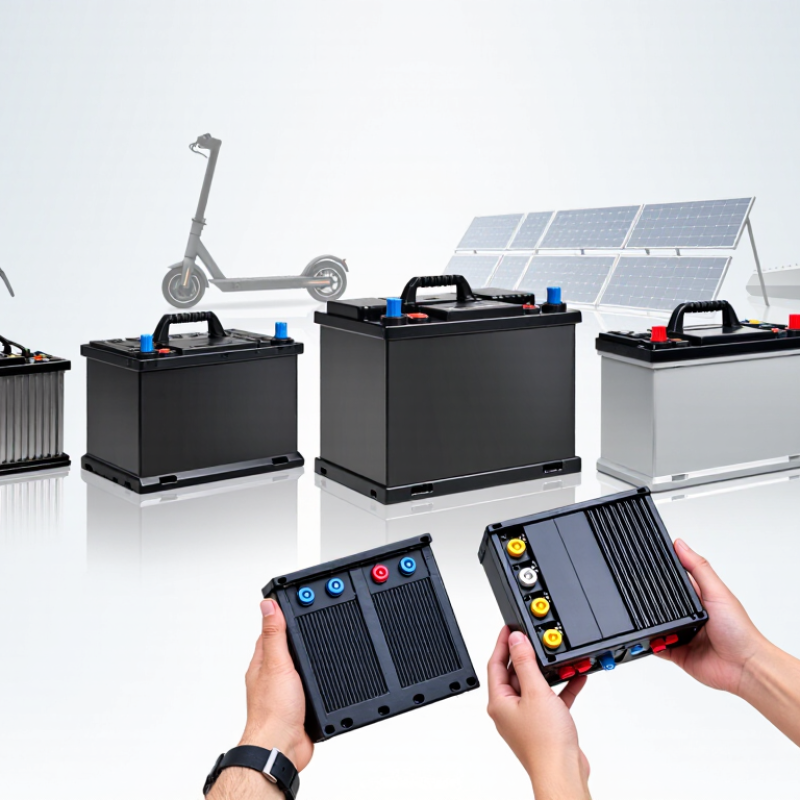
A 6V lithium battery pack needs careful specification because “6V” is often a rounded label. A two-cell lithium iron phosphate pack delivers 6.4V nominally and about 7.2V when fully charged. A two-cell nickel-manganese-cobalt pack usually provides 7.4V nominally and 8.4V at full charge. It is not a direct replacement for every six-volt device.
Check the chemistry first. LFP offers strong thermal stability and long cycle potential, while NMC provides higher energy density in a smaller enclosure. The International Energy Agency reported that LFP represented nearly 40% of global electric-car battery deployment in 2023. That trend supports LFP for durable equipment, but pack design still matters more than chemistry alone. A protected pack needs cell balancing, overcharge protection, short-circuit protection, and temperature monitoring.
Capacity should be compared in watt-hours, not amp-hours alone. A 6.4V, 20Ah LFP pack stores roughly 128Wh under nominal conditions. Real output drops with cold temperatures, aging, and high discharge currents. BloombergNEF reported an average lithium-ion pack price of 139 dollars per kWh in 2023, but this figure does not represent a finished small pack. Enclosure quality, connectors, certification testing, and battery-management electronics can change the purchase value significantly. Voltage labels remain imperfect. Verify the charger, load range, cutoff voltage, dimensions, and continuous current before selecting a 6V pack or a 73.6V system.
| Pack Profile | Nominal Voltage | Cell Configuration | Chemistry | Full-Charge Voltage | Capacity | Approx. Energy | Recommended Continuous Discharge | Typical Cycle Life | Suitable Applications |
|---|---|---|---|---|---|---|---|---|---|
| 73.6V Standard Pack | 73.6V | 23S1P | Lithium Iron Phosphate (LiFePO4) | 83.95V | 20Ah | 1,472Wh | 50A | 2,000–5,000 | Light electric vehicles, compact traction systems, mobile equipment |
| 73.6V Extended-Range Pack | 73.6V | 23S2P | Lithium Iron Phosphate (LiFePO4) | 83.95V | 40Ah | 2,944Wh | 80A | 2,000–5,000 | Golf carts, utility vehicles, floor-care machines, backup power |
| 73.6V High-Capacity Pack | 73.6V | 23S3P | Lithium Iron Phosphate (LiFePO4) | 83.95V | 60Ah | 4,416Wh | 120A | 2,000–5,000 | Industrial vehicles, marine auxiliary systems, renewable-energy storage |
| 73.6V Deep-Cycle Pack | 73.6V | 23S4P | Lithium Iron Phosphate (LiFePO4) | 83.95V | 80Ah | 5,888Wh | 160A | 2,000–5,000 | High-demand traction, solar storage, electric work vehicles |
| 6V-Class Compact Pack | 6.4V | 2S1P | Lithium Iron Phosphate (LiFePO4) | 7.30V | 10Ah | 64Wh | 10A | 2,000–5,000 | Portable electronics, small robotics, compact DC equipment |
| 6V-Class Long-Run Pack | 6.4V | 2S2P | Lithium Iron Phosphate (LiFePO4) | 7.30V | 20Ah | 128Wh | 20A | 2,000–5,000 | Portable power stations, mobility devices, low-voltage backup systems |
| 6V-Class High-Power Pack | 4.8V | 2S1P | Lithium Titanate (LTO) | 5.50V | 10Ah | 48Wh | 30A | 10,000–20,000 | High-cycle robotics, regenerative systems, cold-temperature equipment |
Technical note: A 73.6V LiFePO4 pack normally uses 23 series-connected cells, while a conventional 6V-class LiFePO4 pack uses 2 cells in series and has a nominal voltage of 6.4V. Actual capacity, discharge current, dimensions, protection settings, and cycle life vary according to cell specification, operating temperature, depth of discharge, battery-management system, and charger compatibility.
Compare nominal voltage, full-charge voltage, capacity, usable energy, and chemistry. A 100Ah pack stores about 7.36kWh nominally. Actual energy can be lower. Temperature and aging reduce output.
Many packs use 20 lithium-ion cells in series. Chemistry and cell design can change the real voltage range. Check the datasheet carefully. The product title is not enough.
Compare continuous current with your equipment’s normal demand. Then check peak current for starting or climbing. One pack may provide 150A. Another may provide only 80A. That difference matters for heavy equipment.
Check the BMS protections, cell balancing, temperature limits, and communication functions. Ask how the pack handles overcurrent and overheating. A weak BMS can create expensive problems. Specifications sometimes hide missing test conditions.
Request an independent capacity report tested at 25°C. Confirm whether cycle testing used 80% or 100% discharge. Ask for test records, not only catalogue claims. Results may not match perfectly. That uncertainty deserves attention.
Match the voltage range, peak current, connector, mounting space, and communication interface. The charger must follow the battery’s charging profile. Measure the installation area with a tape measure. A connector mismatch can stop the installation.
Include freight, duties, safe packaging, spare fuses, and possible replacement labor. A lower purchase price may not mean better value. One damaged connector can delay the whole project. I may still overvalue the cheapest quote.
Get the warranty period and exclusions in writing. Ask whether it covers capacity loss, shipping damage, and replacement labor. Request response times and troubleshooting steps. Confirm spare-part availability. Support matters when communication stops.
Request a sample or independent inspection first. Photograph labels, connectors, enclosure seals, and packaging during delivery. Check service access and mounting points. Small details prevent costly surprises. No ranking fits every load profile.
Choosing the right 73.6V Lithium Battery Pack requires more than comparing voltage alone. Buyers should evaluate the battery chemistry, nominal and peak voltage, capacity, energy density, cycle life, discharge rate, dimensions, weight, and battery management system. This guide compares seven leading configuration types according to performance, reliability, installation requirements, and value, helping users identify suitable solutions for electric mobility, industrial equipment, renewable energy storage, and other global applications.
Safety and compliance are equally important. Buyers should review protection features, testing documentation, applicable international certifications, packaging rules, and transportation requirements before placing an order. The final decision should also consider compatibility with the charger and device, operating temperature, expected workload, warranty coverage, customization options, production capacity, lead time, and supplier support. A carefully selected 73.6V Lithium Battery Pack can deliver dependable power, efficient operation, and long-term value when its technical specifications and service conditions match the intended application.