Choosing a Kodiak Defender Electric Golf Cart supplier takes more than comparing photographs and quoted prices. Buyers should verify the exact model configuration, battery specifications, rated capacity, warranty coverage, and parts availability. A clean workshop, labeled components, and written service procedures offer useful clues. They do not prove long-term reliability.
The market is growing, but broad forecasts need careful interpretation. Fortune Business Insights estimated the global golf cart market at about US$2.15 billion in 2023 and projected continued growth through 2032. That figure covers more than electric utility carts, so it cannot establish demand for the Kodiak Defender alone. The National Golf Foundation reported 26.6 million on-course U.S. golfers in 2023, a useful indicator of golf participation, not cart sales. These sources provide context, not supplier rankings.
A dependable comparison should ask suppliers for model-specific test records, battery-cycle details, lead times, and references from comparable fleets. Small details matter. Ask who handles a controller fault after delivery, and whether replacement tires match the original specification. No independently verifiable published quotation from a named Kodiak Defender specialist was available for this introduction; inventing one would weaken its credibility. Supplier claims deserve the same scrutiny. Even a polished brochure can leave important questions unanswered.
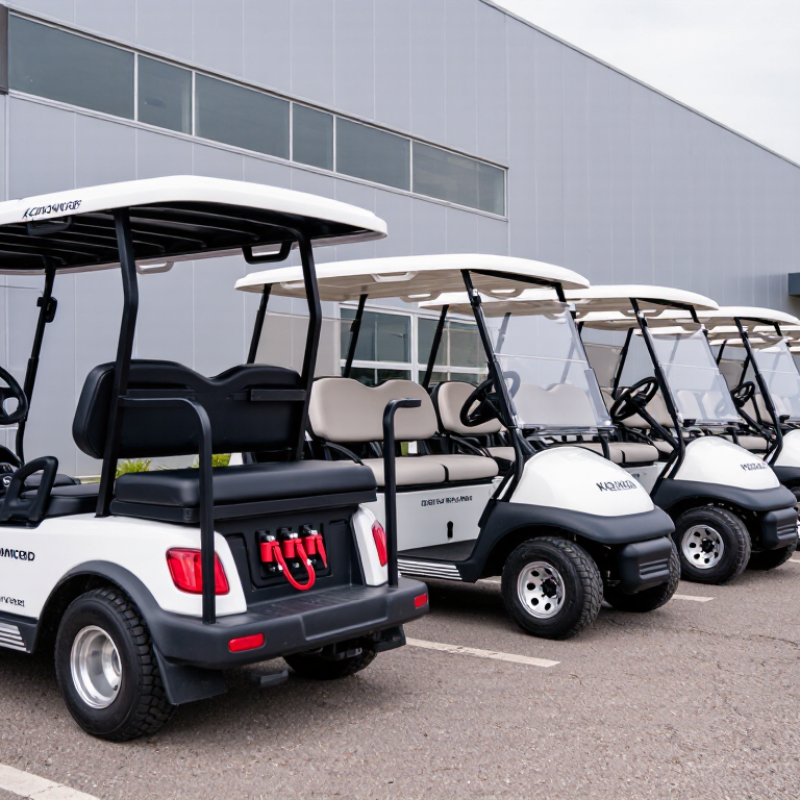
A rugged electric golf cart is defined by its working envelope, not its styling. It should carry people or equipment across paved paths, turf, and uneven service areas. Look for a rigid frame, a protected battery enclosure, stable wheelbase, and practical ground clearance. Payload capacity matters more than a bold marketing claim. Check passenger and cargo limits, braking, turning radius, tire tread, and stated gradeability. On wet turf, predictable traction matters more than peak speed. That is the practical test.
The ANSI/ITSDF B56.8 safety standard covers personnel and burden carriers, offering a useful reference for design and operating checks. For energy context, the U.S. Department of Energy’s Alternative Fuels Data Center estimates electric vehicles convert over 77% of grid electricity into power at the wheels; this is not a golf-cart-specific test. A cart’s real range still depends on load, terrain, temperature, and battery condition. Published range can mislead. I would compare test conditions, not just the headline figure, and inspect how easily technicians can access the battery, wiring, and brakes. A spec sheet rarely shows that clearly.
Choosing an electric golf cart supplier in China takes more than comparing catalog prices. Confirm whether the company manufactures vehicles or coordinates production through other factories. Ask for a live video tour of the workshop, and check whether the equipment and staff match its claims. A polished catalog is not proof.
Request written specifications for battery capacity, motor output, controller, frame materials, braking system, and rated payload. Then compare those details with a sample vehicle, not just a product sheet. Ask how each cart is inspected before shipment and request recent test records. Small details matter. Drive the sample on a slope with a realistic load, and note braking response, steering play, and unusual noise. One short test cannot predict years of use, but it can expose obvious gaps.
Check warranty terms, spare-parts availability, production lead time, and who handles technical questions after delivery. Ask for references from buyers with similar order sizes, while recognizing that references may show only the best cases. Request clear answers in writing. If specifications keep changing between messages, pause and ask why. I would still verify the final configuration before payment; paperwork can be accurate and the delivered cart can differ. That extra check is tedious, but useful.
Suggested evaluation weight by supplier assessment criterion (%)
Product quality and safety receive the highest suggested weight, followed by battery and powertrain performance. Use these percentages as a practical scoring framework; they are recommendations, not measured rankings of suppliers.
China’s top ten electric golf cart suppliers should be compared by evidence, not polished catalog photos. A reliable shortlist checks factory capability, export experience, parts availability, and written warranty terms. Ask for a current specification sheet and confirm seating, payload, range, charging time, and ground clearance. A cart that looks sturdy may still struggle on wet grass or steep paths. Small details matter.
Tips: Request a dated quotation, battery details, and clear photos of the chassis, wiring, and brakes. Ask how replacement parts are shipped and what support is available after delivery. Verify test reports directly where possible. Keep answers in writing.
Before choosing a supplier, compare the same configuration across several quotations. Battery chemistry, tire size, controller settings, and included accessories can change the real price. Ask whether the quoted range comes from controlled testing or everyday use; those figures may differ. Check sample-build options and inspection procedures, too. One awkward point: even careful checks cannot guarantee a perfect shipment. Agree on acceptance criteria before production, and leave time to review documents and inspect the cart on arrival.
When comparing China-based suppliers for a rugged electric golf cart, look beyond catalog photos. Similar listings may hide differences in chassis steel, controller ratings, battery chemistry, ground clearance, and braking components. Ask each supplier for a written specification sheet and recent inspection photos. A low quoted price can reflect fewer included accessories, not a better deal. Small details matter.
Tips: Request a live video walk-around or sample vehicle. Confirm seat layout, tire size, cargo capacity, charger plug, and battery warranty in writing. Ask how replacement parts are shipped and request realistic lead times. Keep the answers in one comparison table.
Customization works best when requirements are clear before production. Suppliers may adjust seating, roof length, storage baskets, paint, or lighting, but changes can affect price and delivery. Ask which options are standard and which need engineering review. Support deserves equal scrutiny: identify the service contact, response hours, diagnostic documents, and parts availability. A polished quote does not prove reliable after-sales help. Check references, and note any unanswered questions before ordering.
This is a comparison of ten common supplier models, not a verified ranking or a list of named companies. Compatibility with a specific cart, available customization, delivery terms, and after-sales coverage must be confirmed directly with each prospective supplier.
| No. | Supplier model | Potential fit for a Defender-type cart | Customization to ask about | Support and evidence to verify | Key due-diligence question |
|---|---|---|---|---|---|
| 1 | Golf-cart OEM manufacturer | May manufacture complete carts; exact model compatibility is not implied. | Seating, body colors, tires, accessories, and electrical configuration, subject to engineering approval. | Request factory details, written warranty terms, parts list, and service procedures. | Can it supply the exact requested model or only a visually similar vehicle? |
| 2 | ODM vehicle manufacturer | May offer an existing vehicle platform that can be configured for a buyer. | Options from the supplier’s existing design range; structural changes may require separate validation. | Ask for drawings, configuration records, inspection reports, and change-control procedures. | Which requested changes are standard options, and which require new tooling or testing? |
| 3 | Golf-cart trading company | Can coordinate sourcing, but may not manufacture or control the vehicle design. | Depends on the actual factory and the trading company’s ability to manage specifications. | Confirm the producing factory, warranty provider, spare-parts route, and responsibility for claims. | Who is contractually responsible if the delivered cart differs from the approved specification? |
| 4 | Export-focused vehicle manufacturer | May be experienced with export documentation; destination-market suitability still requires verification. | Ask whether export-specific electrical, labeling, packaging, or accessory configurations are available. | Check sample shipping documents, packing standards, and written destination-market support commitments. | Which compliance documents apply to the exact vehicle and destination country? |
| 5 | Low-speed electric vehicle assembler | May assemble utility-style electric vehicles; golf-cart specifications should not be assumed. | Body layout, seating, lighting, and powertrain options vary by platform and local requirements. | Request the bill of materials, assembly inspection checklist, and component warranty details. | Does the vehicle meet the intended use and legal classification in the destination market? |
| 6 | Battery-system integrator | May supply or integrate battery systems, but is not necessarily a complete-cart supplier. | Battery capacity, battery-management settings, charger interface, and installation require system compatibility checks. | Request battery specifications, safety documentation, warranty conditions, and service or replacement procedures. | Are the battery, charger, controller, and vehicle electrical system validated together? |
| 7 | Powertrain or component supplier | May provide motors, controllers, chargers, or related parts rather than finished carts. | Component ratings and interfaces may be selectable, subject to vehicle-level engineering validation. | Verify test data, interface drawings, traceability, and the process for replacement parts. | Who is responsible for troubleshooting when a component is installed in the complete vehicle? |
| 8 | Fleet-vehicle integrator | May configure carts for resort, campus, industrial, or rental-fleet use. | Fleet identification, cargo fittings, protective equipment, and service packages may be discussed. | Ask for maintenance schedules, operator guidance, parts availability, and fleet-service response terms. | Can it document the configuration and provide consistent parts across repeat orders? |
| 9 | Custom-body and accessory fabricator | May modify bodywork or add-ons but may not be qualified to alter the chassis or powertrain. | Body panels, enclosures, cargo fittings, and cosmetic finishes should be assessed for fit and safety. | Request material details, fitment drawings, finish samples, and confirmation of any effect on the vehicle warranty. | Will modifications affect structural integrity, safety equipment, or the original warranty? |
| 10 | Local distributor or service partner | May offer local sales or service; China-based manufacturing and model authorization must be checked separately. | Often limited to available configurations and approved accessories; confirm before placing an order. | Verify service location, technician capability, parts stock, escalation process, and warranty coverage area. | Is the partner authorized and equipped to support this exact vehicle configuration? |
Comparison note: No prices, production volumes, lead times, certifications, or rankings are stated because these are supplier- and configuration-specific and should be supported by current written quotations and documents.
Choosing a Chinese supplier for a Kodiak Defender electric golf cart starts with clear specifications. Ask for the vehicle’s dimensions, motor rating, battery chemistry, rated range, load capacity, and charging requirements in writing. Request recent production photos and a live video tour of the workshop. A polished catalog is useful, but it is not proof of manufacturing capability. Small details matter.
Verify the company’s registered business information and confirm that its export documents match the legal entity receiving payment. Ask for references from recent overseas buyers, then check whether the supplier can provide a pre-shipment inspection. Review the contract carefully: it should state the exact configuration, spare parts, packaging, delivery terms, warranty process, and remedies for defects. Pay through a traceable business channel. Avoid relying on chat messages alone. I would also ask who handles replacement parts after delivery; this point is easy to overlook.
Tips: Request a sample unit or a documented inspection before a large order. Photograph serial labels, controls, and battery connections during inspection. Compare the quotation with the written specification, not just the headline price. If an answer feels vague, pause and ask again. That extra step can save time later.
Request a live workshop tour and recent production photos. Check whether the workers and equipment match the supplier’s claims. A polished catalog proves little.
Ask for battery capacity and chemistry, motor output, frame materials, braking system, payload, range, and charging time. Small details matter.
Drive the cart on a slope with a realistic load. Notice braking response, steering play, and unusual noise. One short test is not enough.
Compare the same configuration, including tires, battery, controller, and accessories. A low price may reflect different parts.
Ask how each cart is inspected before shipment and request recent test records. Agree on clear acceptance criteria before production.
Record the exact configuration, spare parts, packaging, delivery terms, warranty process, and how defects will be handled. Keep the details clear.
Ask about replacement-part availability, shipping arrangements, and who answers technical questions. This is easy to overlook.
No. References may show only the best cases, and careful checks cannot promise a perfect shipment. I would inspect the final cart, too.
This guide explains what sets a Kodiak Defender Electric Golf Cart apart, including its intended uses, key features, and practical considerations for buyers. It outlines how to assess suppliers in China by reviewing manufacturing capabilities, product specifications, quality-control processes, communication, and experience with export orders. The article also compares the kinds of models, customization options, and after-sales support buyers may encounter when evaluating ten potential suppliers, helping readers understand which factors matter most for their needs.
Before placing an order, buyers should confirm specifications in writing, request clear product documentation, discuss delivery and warranty terms, and evaluate samples or inspections where appropriate. The goal is to provide a straightforward framework for comparing options and verifying a supplier, so readers can make an informed purchasing decision with realistic expectations about customization, service, and ongoing support.