0%

Choosing a 6.3kW AC Motor for global sourcing requires more than comparing price, voltage, and delivery time. The selection must fit the machine, duty cycle, installation environment, and destination market. A motor that performs well in a clean factory may struggle in dust, heat, or frequent starts. Small details matter. Frame size, shaft dimensions, mounting position, insulation class, and bearing design can determine whether installation takes hours or becomes an expensive redesign.

The International Energy Agency reports that electric motor systems consume approximately 46% of global electricity. The U.S. Department of Energy also identifies industrial motor systems as major energy users, especially when pumps, fans, compressors, and drives operate continuously. Steven Nadel, an energy-efficiency specialist at ACEEE, has stated, “Motor systems account for more than 20% of all electricity use in the United States.” The figure is not merely academic. A small efficiency difference can become a large operating cost across thousands of annual running hours.

This guide examines how to evaluate a 6.3kW AC Motor for international purchasing. It considers IE efficiency class, 50Hz or 60Hz compatibility, rated voltage, protection level, certification, supplier testing, spare parts, and total cost of ownership. IEC 60034-30-1 provides a useful efficiency framework, but certification alone does not guarantee practical suitability. That assumption deserves review. A cheaper motor may require a larger variable-frequency drive, stronger protection, or more frequent maintenance. Buyers should request test reports, dimensional drawings, factory references, and clear warranty terms before approval. The perfect specification does not exist. The reliable choice balances performance, compliance, serviceability, and real operating conditions.
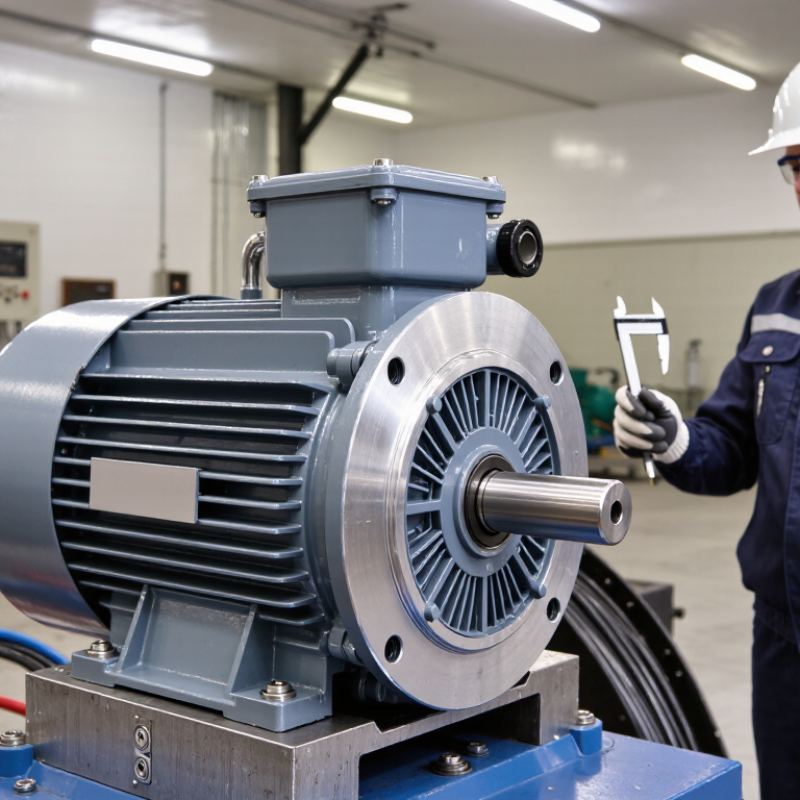
How to Choose a 6.3kW AC Motor for Global Sourcing?

Define the Required Duty and Operating Conditions

Before selecting a 6.3kW AC motor, define how the machine will work each day. Duty changes everything. A motor running continuously needs different thermal performance from one starting every few minutes.

Measure the real load, not only the rated load. Record torque, speed, acceleration time, stops per hour, and peak demand. For continuous operation, S1 duty may be suitable. Intermittent loads may require S3 or S4 duty calculations. A conveyor with frequent starts can overheat even when its average power looks acceptable. Check whether the load includes shock, reversing, braking, or long acceleration periods.

Operating conditions also affect the specification. Confirm the supply voltage, frequency, phase, and allowable voltage variation at the installation site. Note ambient temperature, altitude, humidity, dust, washdown exposure, and ventilation space. Enclosure protection and cooling method should match the environment. A motor in a hot, poorly ventilated cabinet may deliver less usable power. Measure the load. Do not rely on a perfect spreadsheet.

Shaft alignment and mounting position deserve attention during sourcing. Verify the mounting arrangement, shaft dimensions, bearing loads, and coupling type. Ask for temperature-rise data, insulation class, efficiency, starting current, and test records. Global projects may need different electrical documentation and regional compliance evidence. One overlooked detail can delay installation. My own technical review would still revisit the duty cycle after testing, because real machines rarely behave exactly as planned.

Match Motor Power, Torque, Speed, and Load Characteristics

How to Choose a 6.3kW AC Motor for Global Sourcing?

A 6.3kW rating defines output power, not complete performance. Start with the driven load. A conveyor needs steady torque. A compressor may demand high starting torque. A fan usually follows a variable-torque curve. The International Energy Agency reports that motor-driven systems consume roughly 53% of global electricity. Small sizing errors can therefore increase operating costs for years.

Calculate torque with T = 9550 × P ÷ n, where T is newton-metres, P is kilowatts, and n is revolutions per minute.

At 1,450 rpm, a 6.3kW motor produces about 41.5Nm.

At 2,900 rpm, it produces about 20.8Nm.

Check starting torque, acceleration time, duty cycle, and overload requirements. The U.S. Department of Energy identifies motor systems as a major share of industrial electricity use. Efficiency matters, but it cannot replace correct load matching. In field evaluations, engineers often find that nominal power was selected correctly, while speed and starting conditions were overlooked.

Tips: Request a load curve, not only a power figure. Confirm 50Hz or 60Hz operation, rated voltage, insulation class, enclosure protection, ambient temperature, and mounting dimensions. For variable-speed control, verify the motor’s cooling performance at low speed. Leave a reasonable service margin, but avoid excessive oversizing; it can reduce efficiency and power factor. A supplier’s test report should show efficiency, current, torque, vibration, and temperature rise under defined conditions.

Select Voltage, Frequency, Phase, and Enclosure Standards

How to Choose a 6.3kW AC Motor for Global Sourcing?

For a 6.3kW AC motor, voltage and frequency must match the installation grid. A 400V, 50Hz, three-phase motor suits many industrial networks, while 460V, 60Hz systems require different winding data. At 400V, expect roughly 12A under typical efficiency and power-factor conditions. Confirm the nameplate current, starting method, and allowable voltage tolerance. IEC 60034-1 defines key rating and performance requirements for rotating electrical machines. A neat specification sheet can still mislead.

Phase selection is equally practical. Three-phase power usually provides smoother torque and lower operating current than single-phase power. The International Energy Agency reports that electric motor systems consume about 50% of global electricity, making efficiency data commercially important (IEA, Energy Efficiency 2016). Request rated efficiency, power factor, duty cycle, and temperature-rise limits. IE3 may be suitable, but local efficiency regulations can change the acceptable class. Check the destination market.

Enclosure standards need physical context. IP55 protects against dust deposits and water jets, while IP65 offers stronger dust protection and water-jet resistance under IEC 60529. Neither rating guarantees corrosion resistance or safe operation in every outdoor environment. NEMA enclosure classifications should not be treated as automatic equivalents to IP codes. In coastal plants, ordinary painted steel may fail earlier than expected. I would verify shaft seals, drain plugs, mounting dimensions, and test certificates before ordering. This step is often skipped. That is the weakness.

Selection guidance: For a 6.3 kW motor, estimated full-load current decreases as the supply voltage increases. Values are calculated from 6.3 kW output power, 90% efficiency, and 0.82 power factor. Three-phase supplies are generally preferred for this power range because they provide lower current and smoother torque. Verify the nameplate voltage and frequency before ordering: common industrial supplies include 400 V / 50 Hz and 460 V / 60 Hz. For enclosure selection, IEC 60034-5 IP ratings should match the installation environment; IP55 is commonly used for protected industrial areas, while higher IP ratings may be required outdoors or in dusty or wet locations.

Verify Efficiency, Protection, Mounting, and Cooling Requirements

How to Choose a 6.3kW AC Motor for Global Sourcing?

When sourcing a 6.3kW AC motor, efficiency should be checked under the intended load, not only at rated output. Request test data, efficiency class, power factor, and operating current from the supplier. Confirm the motor matches your local voltage and frequency. A motor designed for 50 Hz may not perform correctly on a 60 Hz system. Small details matter.

Protection and cooling need equal attention. Select an enclosure suited to dust, moisture, and washdown conditions at the installation site. Check the IP rating, insulation class, ambient temperature, and overload capability. TEFC cooling often supports dusty industrial environments, while separate ventilation may suit restricted spaces. However, cooling performance can decline when airflow is blocked. I have seen this mistake create unnecessary temperature alarms. Verify the actual airflow path, not just the catalog drawing.

Tips: Measure the available mounting space before ordering. Confirm shaft diameter, keyway size, foot or flange mounting, and terminal-box direction. Ask for dimensional drawings and inspection records. Check vibration limits and bearing details if the motor will run continuously. Do not rely on a single efficiency number. Test conditions can vary. A pre-shipment inspection may reveal incorrect holes, weak paint, or an unsuitable cable entry. These checks cost less than replacing a motor after installation.

Compare Suppliers, Certifications, Costs, and Global Shipping Options

Choosing a 6.3 kW AC Motor for Global Sourcing

Choosing a 6.3 kW AC motor for global sourcing requires more than comparing catalogue prices. Start with the load profile, including starting torque, operating hours, speed, and ambient temperature. Ask suppliers for efficiency curves, insulation class, duty rating, bearing details, and test records. A reliable factory should explain these points clearly, not hide behind generic certificates. Request samples or inspection photos. My early mistake was trusting a low quotation before checking the motor’s actual duty cycle.

Compare at least three suppliers using the same technical sheet. Check whether certification covers the complete motor, production site, and destination market. Confirm voltage, frequency, ingress protection, noise limits, and documentation requirements before payment. Calculate total cost, including tooling, testing, packaging, inland transport, customs charges, insurance, and spare parts. A cheaper unit may become expensive after delays or unsuitable import documents. For shipping, compare sea freight, air freight, and consolidated cargo by urgency and damage risk. Use moisture barriers, shock indicators, and a wooden crate when routes include humid ports. Agree on Incoterms, lead time, tracking, and responsibility for damaged goods in writing. I still leave a contingency budget; freight estimates can change unexpectedly. That is inconvenient, but realistic.

FAQS

What should I define before selecting a 6.3 kW AC motor?

Define operating hours, load torque, speed, acceleration time, and starts per hour. A conveyor starting every few minutes may overheat. Measure the real load. A motor running continuously may need S1 duty. Intermittent operation may need S3 or S4 calculations.

How do I calculate the motor’s approximate torque?

Use T = 9550 × P ÷ n.

Is rated power enough for motor selection?

No. Check starting torque, acceleration time, overload demand, and load curves. A compressor may need strong starting torque. A fan usually has a variable-torque load. A power match alone can still be wrong.

Which electrical details should I confirm?

Confirm voltage, frequency, phase, allowable voltage variation, and starting current. Check whether the motor operates at 50 Hz or 60 Hz. Do not assume the site supply matches the catalogue sheet.

How do environmental conditions affect the motor?

Record ambient temperature, altitude, humidity, dust, washdown exposure, and ventilation space. A hot motor inside a poorly ventilated cabinet may deliver less usable power. Select suitable enclosure protection and cooling. Plan for heat.

What mechanical details should I verify before ordering?

Check mounting position, shaft dimensions, bearing loads, and coupling type. Confirm alignment with the driven machine. Small dimensional errors can delay installation. Measure twice.

What test documents should a supplier provide?

Request efficiency, current, torque, vibration, and temperature-rise results. Also request insulation class, duty rating, bearing details, and cooling information. For variable-speed operation, verify cooling at low speed. Generic certificates are not enough.

How should I compare suppliers and total costs?

Compare at least three suppliers using the same technical sheet. Include testing, packaging, inland transport, customs charges, insurance, and spare parts. A low quotation may hide unsuitable documents or extra handling costs. I once trusted price too early. That was a mistake.

What should I consider when arranging global shipping?

Compare sea freight, air freight, and consolidated cargo by urgency and damage risk. Use moisture barriers, shock indicators, and strong crates for humid routes. Agree on delivery terms, lead time, tracking, and damage responsibility in writing. Freight estimates can change. Plan a contingency budget.

Conclusion

Choosing the right 6.3kW AC Motor for global sourcing requires a clear understanding of the application and operating environment. Start by defining the required duty cycle, load type, starting conditions, ambient temperature, humidity, and installation location. Then confirm that the motor’s power, torque, speed, and load characteristics match the equipment’s actual demands. Voltage, frequency, phase configuration, enclosure rating, and regional standards should also be checked to ensure reliable operation in the target market.

Before making a purchase, evaluate efficiency, ingress protection, mounting dimensions, cooling method, insulation class, and maintenance requirements. A thorough supplier comparison should include product consistency, technical documentation, certifications, production capacity, lead time, warranty support, and total landed cost. Shipping arrangements, packaging quality, customs documentation, and after-sales communication are equally important for international procurement. By reviewing both technical performance and supply-chain reliability, buyers can select a 6.3kW AC Motor that delivers dependable service, efficient operation, and practical long-term value.


Ethan

Ethan

Ethan is a dedicated marketing professional with a strong understanding of the company’s products, customers, and long-term business goals. Through his work, he connects practical product knowledge with clear, engaging communication, helping readers better understand how the company’s solutions can......