Engineered with high-density LiFePO4 chemistry, Navitas AC controllers, and heavy-duty chassis designs certified for worldwide commercial deployment.
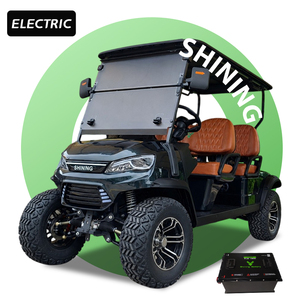
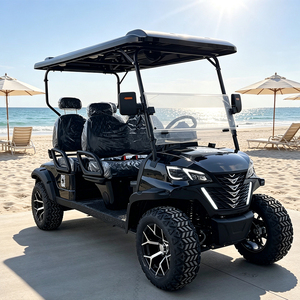
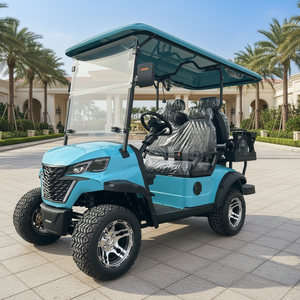
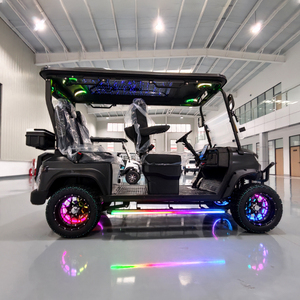

An authoritative technical analysis of battery safety standards, thermal dynamics, and motor-controller integration in modern low-speed vehicles (LSVs).
Executive Summary for Procurement Directors: The global shift toward electrification across golf resorts, gated residential communities, municipal departments, and industrial complexes demands an unprecedented level of battery safety, continuous discharge reliability, and structural compliance. Partnering with certified CE Certified Battery Pack Manufacturers & Suppliers guarantees that low-speed electric vehicles comply strictly with European Harmonized Standards (EN 62619, EN 1175, and UN38.3), eliminating operational liabilities and securing maximum return on equipment capital.
Stepping up from legacy 48V lead-acid systems to 73.6V high-capacity lithium iron phosphate (LiFePO4) packs reduces line-current draw by up to 35% for equal power delivery. Lower current translates directly into reduced thermal dissipation, minimized resistive losses across copper wiring harnesses, and sustained climbing torque on steep inclines even at 15% remaining state of charge (SoC).
European Union CE compliance demands rigorous validation under EN 62619 for industrial lithium batteries. Certification verifies thermal runaway protection, mechanical crush resistance, overcharge/over-discharge electronic cut-offs, and electromagnetic compatibility (EMC Directive 2014/30/EU), shielding fleet buyers from regulatory non-compliance.
Integrating high-efficiency Navitas TAC2 controllers (440A to 600A) allows precise field-oriented control (FOC) over custom 5kW to 6.3kW AC induction motors. This dynamic pairing offers smooth regenerative braking, customizable speed and acceleration profiles, and real-time Bluetooth diagnostics for fleet maintenance technicians.
Quantitative breakdown of technical indicators influencing Total Cost of Ownership (TCO) over a 5-year fleet operational lifecycle.
| Performance / Spec Metric | Legacy Lead-Acid (48V Deep Cycle) | Standard 48V Lithium (Tier-2) | Kodiak / CE Certified 73.6V LiFePO4 |
|---|---|---|---|
| Usable Energy Density | 30-35 Wh/kg (Heavy) | 90-100 Wh/kg | 140-160 Wh/kg (Ultra Light) |
| Cycle Life (80% DoD) | 500 – 800 Cycles | 2,000 Cycles | 3,500 – 5,000+ Cycles |
| Voltage Sag under Heavy Load | High (Noticeable slow down on hills) | Moderate | Minimal (Constant Torque to 5% SoC) |
| Routine Maintenance | Monthly Distilled Water & Acid Clean | Zero Maintenance | Zero Maintenance (Smart BMS Self-Balance) |
| CE & UN38.3 Compliance | Basic Safety Only | Partial Certification | Full EN 62619, UN38.3, EMC & LVD Certified |
| Warranty Terms | 1 – 2 Years Limited | 3 Years | 5 – 8 Years Manufacturer Backed |

Unlike third-party assemblers that combine disparate generic components from unverified suppliers, our manufacturing facility engineers the entire powertrain as a single, cohesive unit. From our hub at 225 Aviation Dr., Thomaston, Georgia, and associated global production lines, every battery cell configuration is custom-matched to specific AC motor windings and controller algorithms.
This holistic engineering approach eliminates impedance mismatches, prevents premature battery degradation under peak current spikes, and yields up to 45% greater hill-climbing power on rough or sloped resort terrain.

Higher performance requires superior braking authority. Mechanical drum brakes common in traditional golf carts are inadequate when carrying full passenger loads down wet or inclined slopes. All our 4-passenger and 6-passenger vehicles feature upgraded hydraulic 4-wheel disc brakes as standard equipment.
Paired with electromagnetic motor braking through the Navitas controller, stopping distances are reduced by up to 60%, providing safety for luxury guest shuttles, municipal utility fleets, and commercial work crews.
Key technological shifts that corporate buyers and distributors must evaluate prior to issuing tenders.
Future-ready fleets are abandoning passive battery setups in favor of smart, cloud-connected Battery Management Systems (BMS). Modern CE-certified battery packs integrate cellular or Bluetooth mesh telemetry that continuously monitors cell voltage variance, internal temperature gradients, cycle counts, and state of health (SoH). Maintenance alerts are pushed directly to fleet operators before a cell breakdown occurs, minimizing vehicle downtime.
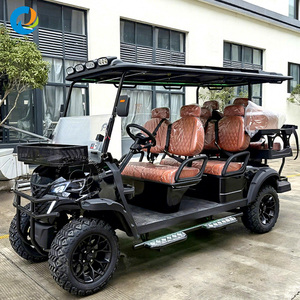
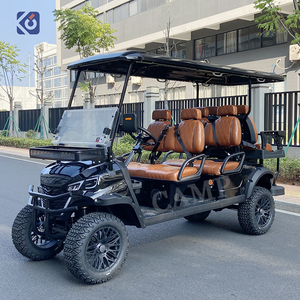
As seen in our flagship 2026 6-Passenger Solar models, roof-integrated monocrystalline solar arrays are transitioning from a novelty to an industry standard. Supplying a trickle charge of 200W–400W under ambient sunlight, integrated solar panels extend daily lithium battery range by 10 to 15 miles, ideal for commercial sightseeing, agricultural ranches, and expansive resort properties.
Commercial operators require near-continuous duty cycles. Next-generation CE battery modules incorporate modular quick-connect enclosures capable of taking high-rate 1C to 2C charges—recharging from 20% to 80% in under 45 minutes—or allowing fast physical swapping without disassembling the vehicle floorboard.
European and global environmental mandates increasingly require battery manufacturers to provide full material traceability and second-life recycling frameworks. LiFePO4 chemistry eliminates toxic heavy metals like Cobalt and Cadmium, allowing enterprise buyers to meet ESG (Environmental, Social, and Governance) targets effortlessly.
Answers to common commercial questions regarding certifications, customization, delivery timelines, and technical integration.