CE Certified Cart Controller Suppliers & Exporter

Engineering Next-Generation 48V–73.6V AC Drivetrains, Navitas Vector Motor Controllers & Integrated Fleet Energy Architectures

Commercial Vehicle Inventory

CE-Compliant Electric Vehicles & Controller Integration

Explore our export-ready fleet lineup equipped with certified high-efficiency AC controllers, advanced LiFePO4 batteries, and heavy-duty drivetrains.
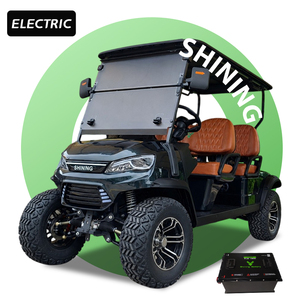
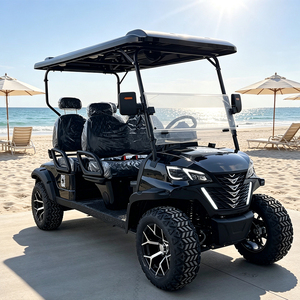
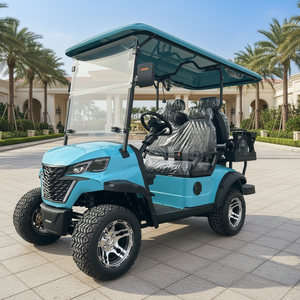
72V Street Legal Electric Golf Cart

Shininglsv Hot Sales Street Legal 4 Seater Electric 72V Lithium Battery Golf Cart 2026 GCC/DOT Certified 30-50km/h

Get a Quote
Mayotte Market Electric Golf Cart

Wholesale Mayotte Market 4 Seat Electric Golf Cart For French Territory

Get a Quote
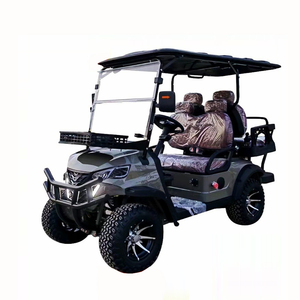
CE Approved 4 Wheel Golf Cart Buggy

2026 Golf Carts Vehicles D5-maverick 4 Passenger Ce Approved 4 Wheel 4 Seater Buggy Adult 3 - 4 1 Years 500 Kg

Get a Quote
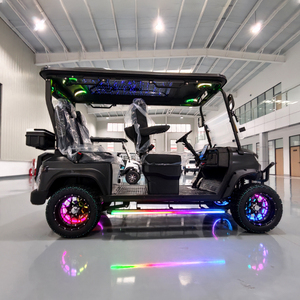
Off-Road Golf Cart Electric Utility Vehicle

Matte Black Aluminium 4Seater Off-Road Golf Cart Electric Utility Vehicle EEC Certified 48-72V 5KW LED Light Strips Front Basket

Get a Quote
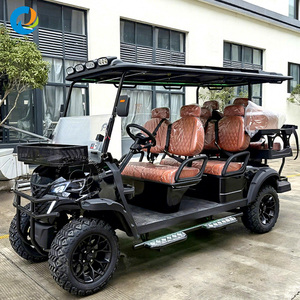
Lithium Golf Cart with Solar Panel

2026 New Design Lithium Golf Cart with Solar Panel 6 Passenger off Road Golf Cart Electric

Get a Quote
Battery Operated Electric Golf Carts

Made In China Cheap High Quality 4 Wheel Battery Operated Electric Golf Carts

Get a Quote
Customizable Solar Panel Electric Golf Cart

Camp Customizable Solar Panel Electric Golf Cart 6 Seater Sightseeing Golf Scooter Off Road Club Car

Get a Quote
Luxury Street Legal Electric Golf Cart

Luxury Design Street Legal Electric 4 Seater Golf Cart With 48v 72v Battery Accept Customization

Get a Quote
73.6V
High-Voltage Architecture
600A
Peak Controller Output
100%
CE / EEC Safety Compliance
8-YEAR
Lithium Battery Warranty
Technical Whitepaper & Engineering Overview

State-of-the-Art Cart Controller Architecture & Engineering Standards

In modern Light Electric Vehicle (LEV) and Low-Speed Vehicle (LSV) engineering, the electronic motor controller functions as the central nervous system of the powertrain. As worldwide regulations tighten across the European Union, North America, and GCC regions, global procurement buyers must look beyond superficial specs and evaluate the underlying electronic infrastructure. A fully CE Certified Cart Controller must conform to rigorous electromagnetic compatibility (EMC) guidelines (EN 61000-6-2/EN 61000-6-4) and functional electrical safety standards for industrial and commercial passenger utility carts (EN 1175:2020).

Kodiak Electric Vehicles, headquartered with primary engineering assembly in Thomaston, Georgia (225 Aviation Dr.), sets the industry benchmark for controller integration. By shifting from legacy DC series/SEPEX setups to high-voltage, vector-controlled AC platforms—specifically pairing customized Navitas TAC2 AC controllers (440A to 600A capacity) with dedicated 73.6V LiFePO4 battery modules—our vehicles resolve the chronic thermal throttling, field-weakening inefficiencies, and dynamic braking failures common to non-certified, white-label imports.

Field-Oriented Control (FOC)

Navitas-tuned sinusoidal AC vector algorithms provide precise torque matching under continuous heavy loads, eliminating jerky low-speed acceleration while reducing MOSFET switching losses by up to 18%.

CE & ISO Functional Safety

Dual microprocessors monitor logic states continuously, featuring automated low-side gate shutdown, hardware over-current cut-offs, and temperature-compensated current limiting for complete vehicle stability.

Dynamic Regenerative Braking

Advanced regen logic recaptures kinetic energy during downhill deceleration and braking, returning amp-hours to the 73.6V lithium bank while reducing mechanical pad wear on our 4-wheel hydraulic disc brakes.

Technical Specification & Component Baseline

Comparative analysis of engineering parameters between standard OEM controllers and Kodiak CE-certified integrated platforms.

Engineering Parameter Standard Import Specs Kodiak CE Certified Platform
Nominal System Voltage 48V Lead-Acid / 51.2V LiFePO4 73.6V High-Efficiency Lithium Architecture
Motor Controller Type Generic Square-Wave DC / Basic AC Navitas TAC2 Programmable AC Vector (FOC)
Peak Current Rating 250A – 350A Max 440A (MX) / 600A (Apex & Defender)
Braking Interface Mechanical Rear Drum Braking Hydraulic 4-Wheel Disc + Electronic Regen
Thermal Management Passive Die-Cast Heat Sink Extruded Anodized Aluminum with Active Map
Enclosure Protection IP54 Water-Resistant IP67 Fully Sealed Automotive Enclosure
Communication Protocol Proprietary Analog / Unshielded RS232 Automotive CAN 2.0B + Wireless Bluetooth Diagnostics

System-Level Integration Advantages

A motor controller cannot be evaluated in isolation. When integrated into the Kodiak MX, Apex, and Defender chassis, the controller works in direct tandem with high-rate BMS logic and 5kW to 6.3kW AC induction/PMSM motors.

  • Zero Voltage Sag: Higher operating potential (73.6V) reduces current draw (Amps) for equivalent power output (Watts), cutting thermal losses (I²R) in harness and MOSFETs.
  • Precision Slope Control: Automatic anti-roll-back algorithm holds fully laden 6-passenger vehicles on 30% grades without brake pedal pressure.
  • Diagnostic Telemetry: Real-time CAN-bus logging allows commercial fleet management teams to audit energy consumption, speed parameters, and fault histories remotely.

Global Technological Development Trends in Cart Controllers

The global market for light electric vehicle controllers is experiencing a major technological transition driven by rising safety standards, fleet electrification, and demands for greater energy efficiency. Fleet operators in resort management, municipal service, commercial utility, and residential communities are moving away from uncalibrated aftermarket components toward unified, factory-integrated drivetrains.

1. Migration to 72V/73.6V High-Voltage Systems

Historically, the golf cart and utility vehicle industry relied on 36V and 48V battery architectures. Modern high-performance platforms are migrating to nominal 72V and 73.6V systems. Operating at higher voltages yields significant physical advantages: lower phase current for identical kilowatt output, reduced heat generation in copper windings, thinner gauge wiring harnesses, and prolonged duty cycles under continuous load.

2. CAN-Bus Centralization & Telemetry

Independent, isolated motor controllers are being replaced by CAN 2.0B networked systems. The controller now acts as a central hub, communicating directly with the Battery Management System (BMS), digital dashboard clusters, hydraulic ABS modules, onboard solar chargers, and IoT GPS telemetry units. This ensures total system shutdown during thermal anomalies or battery cell imbalance.

3. Silicon Carbide (SiC) & Advanced MOSFETs

Next-generation CE-certified controllers are adopting Wide Bandgap (WBG) semiconductors, such as Silicon Carbide (SiC) MOSFETs. SiC technology enables ultra-high switching frequencies (up to 20kHz+) with minimal switching loss, reducing controller dimensions, eliminating audible motor whine, and allowing operation in ambient temperatures exceeding 60°C without derating.

Future B2B Procurement Trends for Electric Cart Controllers & Vehicles

For commercial procurement officers, OEM manufacturers, and regional distributors, sourcing CE-certified cart controllers and complete electric vehicle fleets requires a forward-looking strategy. Key trends shaping procurement decisions over the next five years include:

  • Strict Certification Auditing: International customs authorities (EU, GCC, North America) are increasing inspections for CE marking, EMC directives, and DOT/EEC compliance. Non-certified controllers risk immediate seizure or total failure during import safety compliance audits.
  • Unified Platform Standardisation: Commercial fleet buyers are opting for standardized chassis and controller pairings. Utilizing a single controller architecture (such as the Navitas TAC2 platform across 4-passenger and 6-passenger configurations) simplifies spare parts inventory, technician training, and warranty claim administration.
  • Total Cost of Ownership (TCO) Prioritisation: Sourcing low-cost, uncertified golf carts often leads to premature controller burnout, battery degradation, and safety risks. High-reliability controllers backed by 5-year vehicle warranties and 8-year lithium battery warranties yield lower lifetime TCO despite higher initial acquisition costs.
  • Auxiliary Solar Energy Integration: With solar utility carts becoming mainstream across eco-resorts and commercial campuses, modern controllers must support dual input charging paths, allowing solar MPPT regulators to charge high-voltage lithium banks safely without damaging logic circuits.

Why Sourcing from Kodiak Electric Vehicles Delivers a Strategic Advantage

Kodiak Electric Vehicles combines American engineering oversight with agile global manufacturing supply chains. As an established exporter and supplier of high-performance electric utility vehicles and cart controllers, our enterprise capabilities guarantee unmatched product quality and technical support:

State-of-the-Art Assembly & Quality Control

Operating from our assembly facility in Thomaston, GA, every Kodiak vehicle undergoes rigorous dynamic load testing, high-potential electrical insulation testing, and thermal imaging diagnostics prior to export shipping.

Navitas Strategic Powertrain Calibration

Our direct engineering partnership with Navitas Vehicle Systems allows factory-level parameter tuning. Vehicles ship with customized acceleration profiles, field weakening curves, and regenerative response curves matched to target operating environments.

Turnkey OEM/ODM Fleet Customisation

From custom powder-coated aluminium chassis and 10+ automotive finish body paints to specialized commercial cargo boxes and solar roofs, we configure utility vehicles to meet exact commercial buyer specifications.

Comprehensive Export Warranty & Support

We support our international distribution network with an industry-leading 5-year full vehicle warranty on the MX series and an 8-year warranty on ECO Lithium battery systems, backed by dedicated spare parts inventory and technical support.

Procurement & Compliance Guide

Frequently Asked Questions (FAQ) for B2B Buyers

Essential guidance for commercial buyers, importers, and fleet managers sourcing CE-certified controllers and electric vehicles.

What does CE certification specifically guarantee in an electric cart controller?
CE certification verifies that the cart controller complies with mandatory European Union health, safety, and environmental protection standards. For motor controllers, this specifically covers EN 61000-6-2 (Electromagnetic Immunity for Industrial Environments), EN 61000-6-4 (Electromagnetic Emissions), and EN 1175:2020 (Electrical Safety for Material Handling and Utility Vehicles). This prevents control logic interference from cellular/radio frequencies and guarantees safe automated cutoff during system short circuits.
Why is a 73.6V lithium controller architecture superior to traditional 48V systems?
A 73.6V architecture operates at higher electrical potential, reducing current (amperage) requirements for equivalent motor output power (Watts = Volts x Amps). Lower current reduces thermal stress on controller MOSFETs and wiring harnesses by up to 40%, delivering extended range, consistent acceleration on steep inclines, and preventing thermal shutdown under high payload operations.
Can controller parameters (speed, torque, regen) be customized for fleet deployment?
Yes. All Kodiak vehicles equipped with Navitas TAC2 AC controllers allow parameter programming via secure Bluetooth dealer software or factory pre-flashing. Procurement managers can lock maximum speed limits (e.g., 20 km/h for rental resorts or 45 km/h for street-legal LSV routes), calibrate hill-climb holding force, and adjust regenerative braking strength according to fleet safety guidelines.
How do high-ambient temperatures affect controller performance in tropical or desert resorts?
Uncertified or low-grade controllers typically undergo heavy thermal derating (current limiting) when heatsink temperatures reach 65°C, causing vehicles to stall or lose power on slopes. Kodiak controllers feature extruded aluminum heatsink designs, thermal-paste coupling, and dynamic thermal mapping algorithms that maintain continuous power output up to ambient temperatures of 50°C (122°F).
What documentation is supplied for international customs clearance and import compliance?
Every export shipment includes comprehensive technical documentation, including CE Certificates of Conformity (CoC), EMC Test Reports, UN38.3 Lithium Battery Safety Certificates, MSDS datasheets, ISO9001 factory certificates, and DOT/GCC/EEC compliance documentation for street-legal configurations where applicable.
What is the expected lifespan and warranty coverage for the controller and battery system?
Kodiak MX models carry a full 5-year vehicle warranty, while Apex and Defender models featuring premium Lithium ECO battery modules include an 8-year battery warranty. The solid-state design of our AC vector controllers eliminates wearable mechanical contacts, ensuring an operational design lifespan exceeding 10+ years under normal maintenance schedules.
How does solar panel integration work alongside the primary cart motor controller?
In solar-assisted configurations (such as our 6-Passenger Solar Off-Road Utility models), a high-efficiency MPPT (Maximum Power Point Tracking) solar charge controller operates in parallel with the main battery management system (BMS). The MPPT regulator matches the 72V/73.6V system voltage curve, providing continuous trickle charging without creating voltage spikes that could trip sensitive controller logic.

Upgrade Your Fleet with CE-Certified Powertrains

Contact our global sales and engineering team today to receive detailed technical datasheets, wholesale pricing schedules, and OEM fleet customization parameters.