Explore our export-ready, OEM-customized electric golf carts and low-speed utility vehicles engineered for resorts, fleets, and municipal applications.
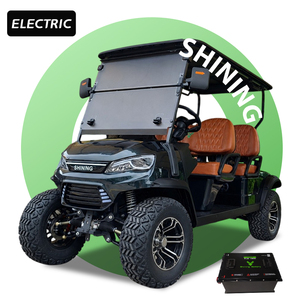
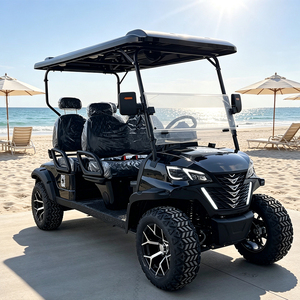
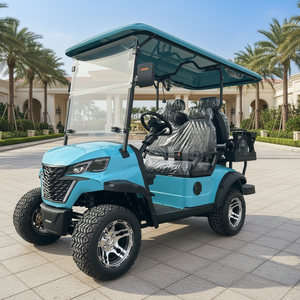
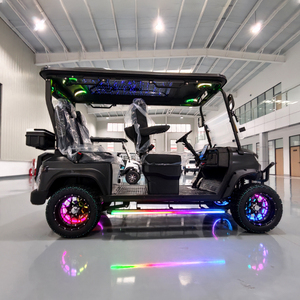
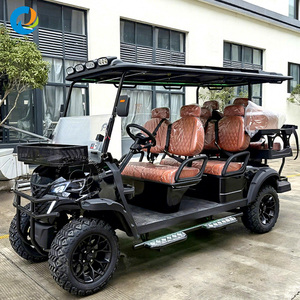
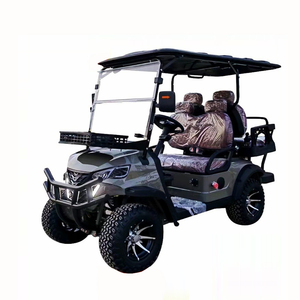
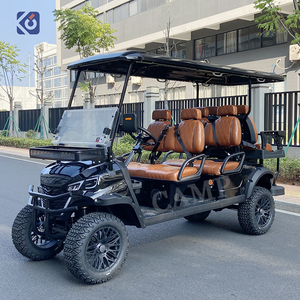
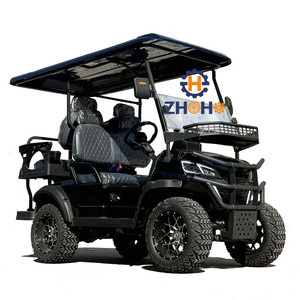
Standardizing high-voltage AC powertrains, precision chassis metallurgy, and rigorous European CE directives across global commercial fleet deployments.
Modern B2B electric vehicle procurement requires a shift away from off-the-shelf, badge-engineered carts. High-end resorts, commercial golf courses, gated residential municipalities, and industrial facilities demand matched drivetrains where battery chemistry, AC motor torque curves, and programmable motor controllers operate in perfect synchrony. Our manufacturing facilities combine automotive-grade chassis welding with European safety directive compliance to guarantee predictable range, zero thermal runaway risk, and minimal total cost of ownership (TCO).
A comprehensive technical breakdown of European Directives, testing protocols, and industrial compliance required for international fleet importation.
Ensures structural frame integrity, steering gear ratio stability, emergency shutoff systems, and mechanical risk mitigation under full-load gross vehicle weight dynamics (GVWR).
Mandates strict insulation resistance, creepage distance, and high-voltage circuit safety for 48V, 72V, and 73.6V nominal lithium-ion battery management systems (BMS).
Validates that high-output Navitas AC controllers and on-board digital converters emit zero harmful electromagnetic radiation and resist external RF interference.
Specific technical requirements for electrical systems in industrial self-propelled trucks and driver-operated utility vehicles, setting strict thresholds for harness flame retardance.
Guarantees repeatable OEM assembly line controls, tracing every motor, controller, battery cell, and chassis weld back to certified master raw material batches.
Equips vehicles with mandatory homologation hardware: three-point seatbelts, AS1 laminated safety glass windshields, LED signal arrays, dual side mirrors, and VIN stamping.
In the global electric vehicle supply chain, CE certification is not merely a decorative stamp—it is a comprehensive engineering validation framework mandatory for legally marketing and operating electric carts across the European Economic Area (EEA), French Overseas Territories (such as Mayotte, Martinique, and Guadeloupe), and international jurisdictions adhering to EU safety harmonizations. Uncertified import vehicles expose municipal operators, resort buyers, and fleet managers to severe legal liability, uninsurable asset risk, and catastrophic operational downtime caused by uncalibrated electrical failures.
Our manufacturing ecosystem enforces stringent compliance protocols at every stage of fabrication. From structural finite element analysis (FEA) of our lightweight aluminum chassis to high-potential (Hi-Pot) insulation testing of 72V/73.6V wiring harnesses, every cart is engineered to withstand extreme environmental stress. By integrating top-tier AC drivetrains—specifically featuring Navitas TAC2 440A/600A controllers paired with heavy-duty 5kW to 6.3kW brushless AC induction or permanent magnet synchronous motors—our factory output achieves superior energy conversion efficiency while adhering strictly to CE directive threshold limits.
Direct technical comparison between generic market offerings and custom CE-Certified OEM factory standards.
| Architecture Feature | Generic / Economy Carts | CE Certified OEM Custom Factory Standard | Fleet Operational Advantage |
|---|---|---|---|
| Battery System | 48V Lead-Acid or Basic NMC Packs | 73.6V / 105Ah High-Density LiFePO4 Battery | Zero maintenance, 3-4x cycle life, constant voltage output up to 99% discharge. |
| Motor Controller | Generic 275A-350A DC Controllers | Navitas TAC2 440A / 600A Programmable AC Controller | Regenerative braking, hill-hold capability, mobile app diagnostic telemetry. |
| Braking Hardware | Rear Mechanical Drum Brakes | Hydraulic 4-Wheel Disc Brakes with Dual-Circuit Master Cylinder | 60% shorter stopping distances under maximum passenger/cargo loads; wet-slope safety. |
| Chassis & Frame | Standard Painted Carbon Steel | Rust-Proof Extruded Powder-Coated Aluminum Alloy | Eliminates structural corrosion in coastal, resort, and high-humidity environments. |
| Regulatory Standards | Non-Certified / Basic Factory Self-Declaration | Full CE (Machinery, LVD, EMC, EN 1175) & Optional DOT/EEC Homologation | Seamless import clearance, legal street compliance, insurance eligibility. |
| Vehicle Warranty | 1-Year Limited Structural Warranty | 5-Year Vehicle / 8-Year LiFePO4 Battery Coverage | Protected asset capital expenditure, reduced long-term maintenance overhead. |
Anticipating market shifts toward high-voltage architectures, intelligent telematics, and multi-scenario Low-Speed Utility Vehicles.
The commercial fleet sector is rapidly abandoning legacy 48V systems in favor of 72V and 73.6V nominal lithium configurations. Higher voltage dramatically reduces current draw (amperage) for the same kilowatt power output, minimizing heat dissipation, reducing wiring harness copper weight, and increasing thermal efficiency during sustained incline climbing with multi-passenger loads.
Next-generation custom factory builds are incorporating flexible monocrystalline solar panels directly into molded roof structures. Solar auxiliary charging provides 5 to 12 miles of additional passive daily range under direct sun exposure, offsetting parasitic loads from audio systems, lighting strips, and onboard telemetry while extending battery life.
Procurement directors now require cloud-connected Vehicle Control Units (VCUs). Commercial operators can monitor real-time State of Charge (SOC), track GPS geofencing parameters, push over-the-air (OTA) controller tuning adjustments, and receive predictive maintenance alerts before electrical faults cause downtime.
Factory production lines are pivoting from single-purpose golf carts to modular chassis architectures. A unified frame platform can be customized in factory settings to become a 4-forward passenger luxury cruiser, a 6-passenger stretched resort shuttle, or a heavy-duty flatbed commercial utility vehicle with minimal re-tooling.
While initial acquisition cost remains a core metric, global B2B buyers now prioritize 5-year TCO. Lead-acid battery replacement cycles (every 2-3 years), acid corrosion maintenance, high energy consumption of inefficient DC motors, and mechanical drum brake wear quickly eclipse initial purchase savings. Purchasing CE-certified 73.6V LiFePO4 carts with AC drivetrains cuts operating expenditures by up to 68% over a 5-year operating window.
Why leading global distributors, resort groups, and dealers partner directly with our specialized custom manufacturing facility.
Our automated robotic paint shop applies automotive-grade clear-coat finishes over durable PPG paint systems. Available in 8 to 10 standard metallic shades alongside full custom RAL matching for branded commercial fleets.
Factory-calibrated 440A to 600A Navitas TAC2 controllers offer customized acceleration curves, dynamic hill descent control, and adjustable top speeds ranging from 25 km/h for golf course limits up to 50 km/h for street-legal LSV duties.
From marine-grade vinyl stitched seats and extended rear flip-flop conversion kits to front utility baskets, integrated soundbars, lifted suspension systems, and golf bag attachments—every unit leaves the factory fully tailored.
Our facility infrastructure (headquartered with regional assembly centers such as our facility at 225 Aviation Dr., Thomaston, GA) combines international supply chain cost advantages with domestic assembly oversight. We maintain extensive replacement parts inventories—including controller harnesses, hydraulic brake pads, steering racks, and solenoid relays—ensuring authorized dealers and enterprise fleet clients experience uninterrupted operational support.
Direct technical answers addressing CE certification, battery life, shipping logistics, and custom OEM manufacturing terms.