Explore our export-grade electric golf carts, low-speed utility vehicles (LSVs), and modular structural frame integration packages tailored for worldwide fleet operators and distributors.
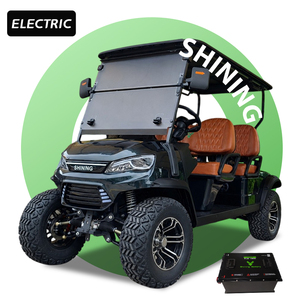
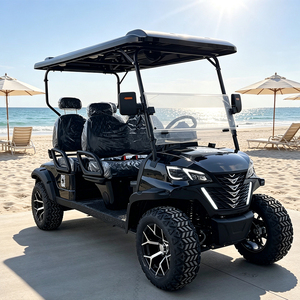
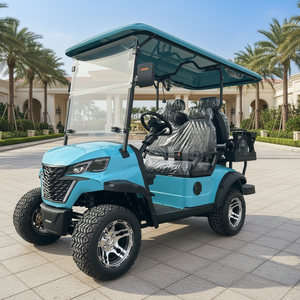
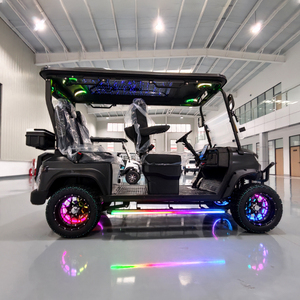
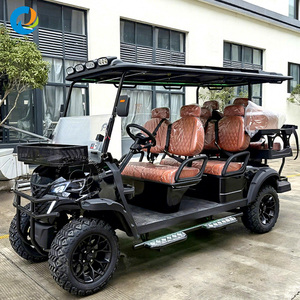
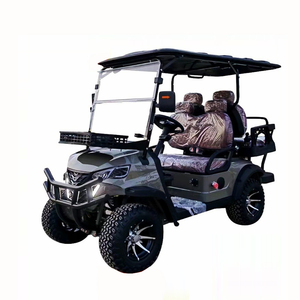
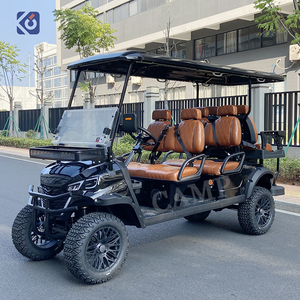
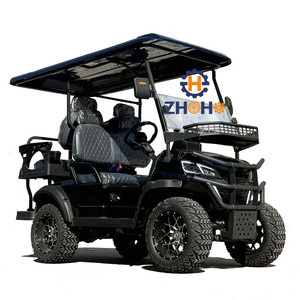
As China's premier manufacturer and global exporter of golf cart frames, light utility vehicle chassis, and specialized aluminum structural assemblies, we combine automotive-grade metallurgy with automated robotic manufacturing.
Engineering tailored chassis geometries optimized for 2, 4, 6, and 8-passenger low-speed vehicles. Fully compatible with high-capacity 72V and 73.6V lithium battery trays and custom motor mountings.
Every steel chassis undergoes full-immersion E-coating combined with high-grade thermoplastic powder finishing, preventing rust and degradation in coastal humid, tropical, and severe salt-spray environments.
Validated through rigorous Finite Element Analysis (FEA) computer simulation and physical torsional endurance testing, guaranteeing dynamic structural integrity under maximum load capacity exceeding 800 kg.
In the rapidly shifting landscape of personal transportation vehicles (PTVs), commercial resort shuttles, and low-speed electric utility buggies, the structural frame serves as the unsung foundational hero. Historically viewed as a mere passive skeleton holding body panels and lead-acid batteries together, the modern cart frame chassis has evolved into a highly engineered structural system that dictates vehicle safety, dynamic range efficiency, torsional rigidity, payload capacity, and total lifespan cost of ownership.
For decades, traditional golf cart manufacturers relied almost exclusively on heavy ladder-style stamped carbon steel frames. While cost-effective to produce, traditional steel suffers from accelerated atmospheric oxidation—particularly in coastal golf resorts, rental fleets, and humid island territories. Furthermore, the sheer weight of structural steel compromised energy efficiency when the industry transitioned to electric drivetrains.
As a leading China cart frame supplier and exporter, our engineering team pioneered the mass deployment of heat-treated 6061-T6 and 6005-T6 extruded aluminum profiles. Extruded aluminum frames offer a transformative strength-to-weight ratio, reducing dead vehicle weight by up to 35% without sacrificing tensile strength. This weight saving directly translates into expanded mileage range for 48V, 72V, and 73.6V lithium battery architectures.
| Structural Parameter | Traditional Stamped Steel Chassis | Advanced 6061-T6 Extruded Aluminum | Hybrid High-Tensile Steel Frame |
|---|---|---|---|
| Weight Efficiency | Baseline (Heavy) | 35% Weight Reduction | 15% Weight Reduction |
| Corrosion Resistance | Moderate (Prone to rust if chipped) | Exceptional (Natural oxide + Anodized) | Superior (E-coated + Powder Coat) |
| Yield Strength (MPa) | ~210 - 250 MPa | ~275 - 310 MPa | ~350 - 450 MPa |
| Target Application | Budget In-land Standard Carts | Premium Resort Shuttles & Street Legal LSV | Heavy Duty Utility Carts & Off-Road Buggies |
Vehicle handling dynamics rely heavily on minimizing chassis flex during asymmetric cornering and uneven terrain navigation. When a cart framework experiences torsional twisting, suspension geometry becomes unaligned, causing rapid tire wear, imprecise steering feel, and potential structural fatigue over extended service life.
Modern export-ready cart frames utilize closed-box longitudinal beam designs coupled with cross-member gusseting. Using state-of-the-art robotic Metal Inert Gas (MIG) and Tungsten Inert Gas (TIG) welding, heat dissipation during assembly is tightly controlled. This guarantees sub-millimeter manufacturing tolerances, guaranteeing that mounting points for independent A-arm suspensions, leaf springs, and hydraulic 4-wheel disc brake assemblies align perfectly every single time.
Exporting frames globally requires uncompromising resistance against harsh international ambient environments. A frame shipped from China to the Caribbean, South Europe, or Coastal Americas must withstand extreme salt fog, UV exposure, and thermal cycling. Our factory employs an intensive 9-stage surface treatment protocol:
Procurement directors, OEM vehicle brand owners, and fleet importers must align their supply chains with key upcoming technological shifts driving chassis manufacturing.
Global buyers are transitioning away from fixed single-purpose frames. Future procurement demands modular chassis kits where a core front frame module can seamlessly connect to extended rear platforms—allowing factory lines to assemble 2-seater, 4-seater forward, or 6-seater shuttle models on the same production line with zero re-tooling cost.
Legacy cart frames required aftermarket retrofitting brackets to fit modern lithium batteries. Next-generation cart frame exports feature integrated lower-center-of-gravity (CoG) lithium bays designed for standard 72V/105Ah and 73.6V packs, providing built-in crash protection and enhanced vehicle cornering stability.
Commercial fleets for resorts and municipalities are increasingly specifying extended roof frame support poles integrated into the primary structural frame. These specialized frames cleanly route high-voltage wiring for roof-integrated photovoltaic solar panels directly down to the controller compartment.
Answers to essential technical and commercial questions raised by international procurement managers, fleet assemblers, and OEM vehicle manufacturers.
For standard stock frame configurations (such as 4-seater aluminum PTV frames), our baseline MOQ starts at 10 units to support sample vehicle prototype testing. For completely custom OEM structural developments requiring specialized robotic welding jigs and extrusion tooling dies, our standard production MOQ is typically 50 to 100 sets depending on profile complexity.
Extruded 6061-T6 aluminum frames naturally form a protective oxide film and easily achieve over 1,200 hours in standard ASTM B117 salt spray testing with zero structural degradation. In comparison, high-tensile steel frames require cathodic electrodeposition (CED) e-coating plus powder coat finish to reach comparable corrosion resistance. Aluminum is strongly recommended for coastal, resort, and marine applications.
Yes. Our structural frame platforms are engineered with standardized, multi-pattern mounting plates compatible with major global controller brands (such as Navitas TAC2, Curtis, and KDS) and motor layouts (from 3.5kW up to 7.5kW AC induction/PMSM motors), as well as standard hydraulic 4-wheel disc brake caliper brackets.
We offer both Fully Assembled Chassis shipping and Knock-Down (KD / SKD) structural frame packaging. SKD modular packing allows up to 45-60 frame assemblies (with suspension arms and battery trays) to be nested into a standard 40ft HQ container, dramatically reducing per-unit international freight costs for overseas assembly facilities.
We back our structural chassis engineering with a comprehensive 5-Year Limited Structural Frame Warranty for high-tensile e-coated steel frames and up to an 8-Year Structural Warranty for 6061-T6 extruded aluminum frames, covering structural welds, beam integrity, and manufacturing defects under normal rated operating payloads.
Absolute precision laser engraving for 17-digit VIN numbers, serial numbers, and custom brand logos directly into the primary structural frame member is standard procedure for all OEM buyer orders, facilitating smooth local street-legal (DOT/EEC/GCC) registration compliance.
Whether you are scaling an existing electric golf cart brand, developing custom off-road utility buggies, or procuring chassis components for global distribution, our engineering team is ready to deliver world-class structural solutions.