Explore our international-spec electric vehicle line engineered with high-torque AC drivetrains, LiFePO4 automotive-grade energy cells, and global homologation (DOT, GCC, EEC, CE).
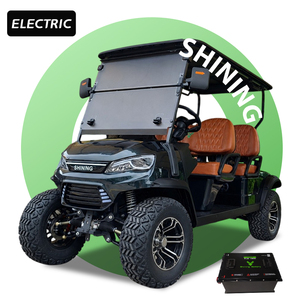
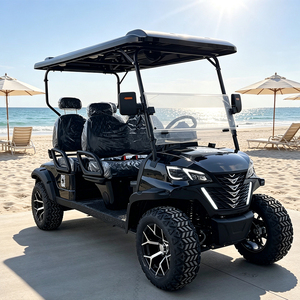
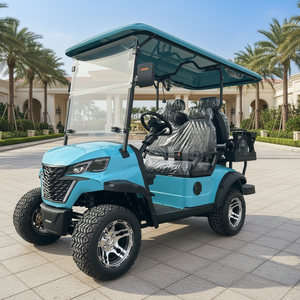
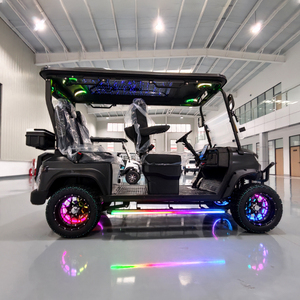
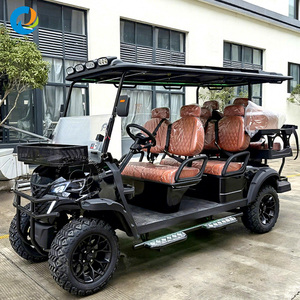
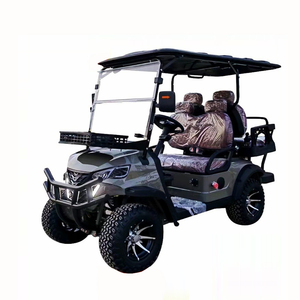
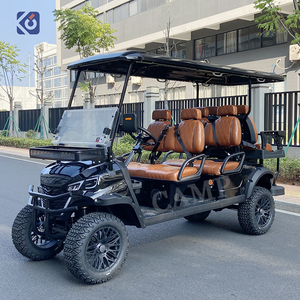
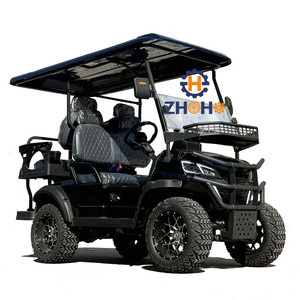
Utilizing Navitas TAC2 440A & 600A vector controllers combined with custom-wound 5kW to 6.3kW AC asynchronous motors, delivering unmatched torque curves for 30%+ grade hill climbs under full passenger load.
Integrated 105Ah to 205Ah LiFePO4 battery modules equipped with smart BMS telemetry. Zero battery watering, sub-2-hour fast charging options, and an extended 8-year operational lifespan.
Engineered to meet rigorous international standards including US DOT FMVSS 500 LSV requirements, European Union EEC L7e categorizations, and GCC safety requirements for seamless global import compliance.
As global urban planning, resort hospitality, municipal management, and golf course operations transition toward zero-emission mobility solutions, China has established itself as the world's primary innovation hub and manufacturing powerhouse for Low-Speed Electric Vehicles (LSVs), utility buggies, and high-performance electric golf carts. Buying directly from top-tier Chinese original equipment manufacturers (OEMs) and exporters provides international distributors, fleet operators, and dealerships with significant cost efficiencies, technology leadership, and custom modular engineering capabilities.
This comprehensive procurement guide and engineering analysis evaluates the technological shifts, battery dynamics, regulatory frameworks, and Total Cost of Ownership (TCO) parameters defining China's export market for electric golf carts and personal transportation vehicles (PTVs) in 2026 and beyond.
Historically, low-speed vehicles relied on industrial DC motors and heavy lead-acid batteries, which suffered from rapid voltage sag under heavy load, high battery degradation in tropical climates, and mechanical wear on brush components. Premier Chinese manufacturing facilities have re-engineered the complete powertrain stack to meet automotive-grade standards:
Engineered specifically for heavy duty cycles, high-voltage architecture minimizes current draw (amperage) across wiring harnesses, significantly reducing thermal dissipation and I²R resistive energy loss. LiFePO4 chemistry provides thermal runaway protection up to 500°C, making these vehicles exceptionally safe for high-temperature deployments in the Middle East, Caribbean, and Australia.
| Specification Parameter | Legacy 48V Lead-Acid Setup | Next-Gen 72V/73.6V LiFePO4 System |
|---|---|---|
| Usable Battery Capacity | 50% - 60% Depth of Discharge (DoD) | 90% - 95% Depth of Discharge (DoD) |
| Energy Density | 30 - 40 Wh/kg | 130 - 160 Wh/kg |
| Charging Time (0-100%) | 8 - 10 Hours (Slow Trickle) | 2.5 - 4 Hours (Fast AC Charger) |
| Maintenance Protocol | Weekly Distilled Water Top-Up & Acid Clean | Zero Maintenance (Sealed BMS Unit) |
| Expected Lifespan | 500 - 800 Cycles (1.5 - 3 Years) | 3,500 - 5,000 Cycles (8 - 10+ Years) |
Direct export configurations feature AC induction or Permanent Magnet Synchronous Motors (PMSM) paired with market-leading controllers such as Navitas TAC2 440A/600A or Curtis AC controllers. Unlike DC motors, AC motors provide full rated torque at zero RPM, preventing roll-back on steep slopes. Advanced regenerative braking profiles recover kinetic energy during deceleration, pumping up to 15% charge back into the lithium pack while preserving service brakes.
Safety specifications are critical for street-legal Low-Speed Vehicles carrying up to 6 passengers or 500kg payloads. Leading Chinese export models replace legacy rear-only drum brakes with dual-circuit hydraulic four-wheel disc brake systems. Combined with vacuum-boosted master cylinders or responsive electronic braking algorithms, these systems achieve stopping distances under 4.5 meters from top speed (50 km/h), fully complying with US DOT FMVSS 500 and European EEC L7e safety mandates.
Navigating international vehicle procurement requires precise understanding of regional regulatory certifications and import requirements. Reputable Chinese exporters design chassis platforms pre-homologated for key target markets:
For golf carts to operate on public roads with speed limits up to 35 mph (55 km/h) in the United States, they must satisfy Federal Motor Vehicle Safety Standard 500 (FMVSS 500). Requirements include VIN assignment, DOT-approved automotive safety glass windshields, seat belts (three-point lap/shoulder), headlights, tail lights, turn signals, exterior mirrors, and backup cameras. Our export platforms offer turnkey DOT-compliant LSV packages directly from the assembly line.
European municipal and commercial buyers demand EEC (European Economic Community) Whole Vehicle Type Approval under the L7e heavy quadricycle category. This requires stringent electromagnetic compatibility (EMC) testing, ISO-standard towing hitches, specialized lighting intensity compliance, and eco-friendly recyclability documentation for plastic body shells and battery elements.
Vehicles exported to the Gulf Cooperation Council (GCC) countries and tropical territories (e.g., French Overseas Territories like Mayotte, Martinique, Reunion) require specialized UV-stabilized polypropylene bodywork, hot-dip galvanized steel chassis frames to withstand high salinity coastal air, and high-output solar panel roof integration to provide continuous auxiliary trickle charging throughout extended daily exposure.
By partnering with established Chinese wholesale electric vehicle manufacturers, global buyers access unparalleled industrial scaling advantages:
Robotic welding cells for electrophoretic-coated steel ladder frames ensure sub-millimeter chassis precision, rust resistance, and high structural rigidity across rugged off-road terrains.
Full customization capability ranging from custom injection-molded body panels in 10+ metallic finishes, bespoke luxury leatherette upholstery with heat-dissipating stitching, custom rim designs, and integrated Bluetooth/GPS fleet management units.
Engineered knock-down (KD) and semi-knock-down (SKD) packaging solutions allow up to 18-24 units per 40ft HQ container, slashing per-unit sea freight logistics costs significantly.
Every vehicle undergoes multi-stage Quality Assurance (QA) testing prior to container loading, including 100% waterproof rain-spray testing, dynamic slope climb stability tests, electronic brake analyzer verification, and 24-hour lithium battery BMS burn-in cycles.
Everything international buyers need to know about ordering, compliance, customization, logistics, and warranty terms.
Our flexible manufacturing structure accommodates initial sample orders of 1 to 4 units for dealer evaluation. For custom OEM branding (custom body colors, stitched logos, tailored wheel patterns, and specialized software tuning), standard container-load quantities (LCL or FCL 20ft/40ft) are recommended to maximize freight efficiency.
All LiFePO4 battery modules incorporated into our electric vehicles are fully certified under UN38.3, MSDS, and CE transport standards. Vehicles can be shipped fully assembled under Dangerous Goods maritime rules (IMO certified) with all safety documentation provided for smooth customs clearance.
We back our vehicles with a comprehensive 5-year chassis warranty and up to an 8-year performance warranty on lithium battery packs. We maintain an extensive inventory of replacement controllers, motor assemblies, hydraulic brake lines, and body components shipped via fast air express (DHL/FedEx) to ensure minimal fleet downtime.
Yes. Utilizing controller programming interfaces (such as Navitas or Curtis software), max speeds can be pre-configured anywhere between 20 km/h (for strict resort or golf course safety rules) up to 50 km/h (for street-legal LSV commuter pathways). Torque curves and acceleration ramps can also be tailored for smooth passenger transport.
Our high-efficiency monocrystalline solar panels are embedded directly into the lightweight fiberglass or composite roof structure. Integrated MPPT charge controllers step up the solar voltage to match 72V battery banks, extending daily operating range by 15-25 km under sunny conditions and drastically reducing grid charging dependency.
Standard factory lead time is 15 to 25 calendar days depending on custom specification requirements and order volume. Transit times vary by target destination port: 14-20 days to US West Coast, 25-35 days to US East Coast and Europe, and 10-15 days across Southeast Asia and the Middle East.
Empower your fleet, resort, or dealership network with high-margin, ultra-reliable 72V lithium electric golf carts and LSVs built to exact international standards. Request factory-direct wholesale pricing and complete technical specifications now.
Inquire Now