Explore our export-ready, street-legal electric golf carts and low-speed vehicles integrated with high-performance 48V–73.6V smart charging units.
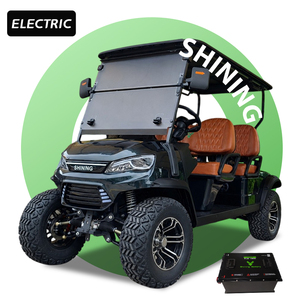
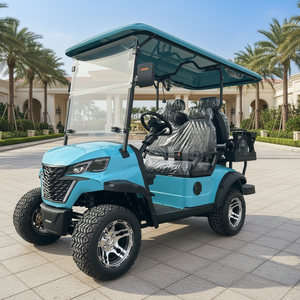

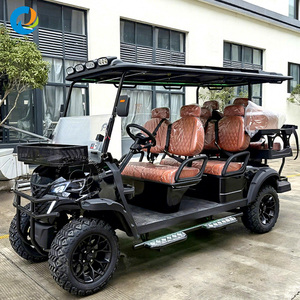
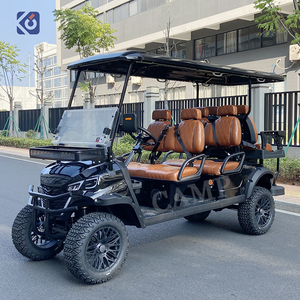
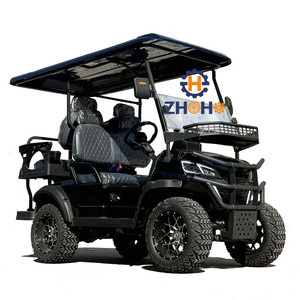
In the rapidly transforming landscape of light electric vehicles (LEVs), low-speed vehicles (LSVs), and commercial golf cart fleets, power conversion infrastructure has emerged as the critical bottleneck determining operational uptime, battery cycle longevity, and fleet safety. As global manufacturers shift away from legacy flooded lead-acid batteries toward high-density LiFePO4 (Lithium Iron Phosphate) and NCM lithium chemical architectures, traditional charging units are no longer sufficient.
Modern commercial deployments demand bespoke OEM charging solutions engineered with active Power Factor Correction (PFC), high-frequency resonant LLC topologies, dynamically configurable Constant Current/Constant Voltage (CC/CV) multi-stage charging profiles, and intelligent CAN-bus handshakes with integrated Battery Management Systems (BMS). As an established Custom OEM Cart Charger Manufacturer & Exporter, our engineering division manufactures custom onboard and offboard power conversion platforms customized for global golf cart brands, resort shuttles, utility transport fleets, and municipal LSV fleets.
Information Gain Insight: Standard aftermarket chargers often cause premature capacity degradation due to uncalibrated thermal drift and static voltage output. Engineered OEM cart chargers dynamically regulate voltage and current based on real-time cell voltage telemetry, reducing lithium plating and extending pack service life by up to 35%.
Our custom cart chargers are designed around heavy-duty automotive hardware standards. Whether powering a standard 48V 105Ah LiFePO4 configuration or a high-torque 73.6V commercial utility vehicle operating with a 6.3kW Navitas AC drivetrain, our charging architectures ensure ultra-clean DC power delivery under harsh environmental stresses.
Direct communication via CAN 2.0B or RS485 enables real-time voltage, current, and temperature handshakes between the charger and the vehicle's BMS, preventing thermal runaway and overcharging.
Integrated active Power Factor Correction minimizes reactive power losses, permitting full 90V–264V universal AC input operation with peak conversion thermal efficiencies up to 95.8%.
Die-cast aluminum alloy casings filled with thermal-conductive silicone pot sealant protect sensitive internal power electronics against water immersion, salt spray, and vibration.
To assist technical procurement teams, OEM engineering managers, and vehicle designers in selecting optimal charging configurations, the matrix below highlights technical differentiators between off-the-shelf consumer chargers and our industrial OEM-grade solutions:
| Specification Parameter | Standard Aftermarket Charger | OEM Industrial Smart Charger | Commercial Advantage |
|---|---|---|---|
| Nominal System Voltages | Fixed 48V or 72V | Custom 36V, 48V, 72V, 73.6V, 80V, 96V | Matches custom LiFePO4 & NCM battery packs |
| BMS Integration | None (Static Voltage Curve) | CAN 2.0B / RS485 / Custom Baud Rates | Eliminates unbalance, prevents cell over-voltage |
| Ingress Protection | IP54 (Fan-Cooled Open Vents) | IP67 / IP68 Fully Encapsulated Potting | Resists rain, coastal salt air, and pressure washing |
| Conversion Efficiency | 85% - 88% | 94% - 96% (Resonant LLC Topology) | Dramatically reduces heat output and energy costs |
| Vibration & Shock Resistance | Commercial Grade (1.5G) | Automotive ISO 16750-3 (5G-10G) | Handles rough off-road terrain without component shear |
| Compliance Certification | Basic CE | UL1564, GCC, DOT, EEC, CE, RoHS, KC | Fulfills global import and street-legal vehicle laws |
Every commercial vehicle deployment features distinct operational characteristics. A 4-passenger street-legal cart operating in a coastal resort community requires different charging management compared to a lifted 6-passenger utility cart equipped with a 600A Navitas controller traversing heavy off-road inclines.
Our manufacturing facilities supply both onboard units and portable offboard desktop chargers. Onboard chargers feature ultra-compact form factors designed for direct mounting to the vehicle chassis frame, complete with integrated AC shore-power inlet plugs and vehicle ignition interlock safety relays (preventing the cart from being driven while plugged in). Offboard units feature rugged rubber bumper guards, ergonomic carry handles, and heavy-duty output connectors (e.g., Anderson SB50/SB175, REMA, or customized OEM plug headers).
Unlike standard lead-acid batteries requiring equalization charges, high-capacity lithium packs require ultra-precise voltage thresholds. Our engineering team develops custom microcode to match your exact BMS parameters:
As a leading Custom OEM Cart Charger Manufacturer & Exporter, our state-of-the-art production complex incorporates automated SMT mounting lines, robotic potting stations, and computerized testing bays to ensure strict quality consistency across multi-thousand unit orders.
Every single unit undergoes a mandatory 4-hour dynamic full-load burn-in cycle inside high-temperature burn-in chambers to verify thermal stability prior to packaging.
Automated Test Equipment (ATE) checks insulation resistance, leakage current, high-voltage withstand capability (Hi-Pot test up to 2500VAC), and CAN communication reliability.
We offer turnkey OEM support: custom laser-etched aluminum top plates, custom wiring harness lengths, branded box packaging, and local certification compliance marking.
B2B buyers, fleet distributors, and OEM vehicle engineers must plan for upcoming technology shifts in the light electric vehicle segment. When sourcing custom cart chargers, consider these forward-looking market drivers:
While 48V remains common for standard 2-seater and 4-seater golf carts, modern 6-passenger shuttles, lifted off-road buggies, and commercial utility transport vehicles are rapidly migrating to 72V and 73.6V architectures. Higher system voltage cuts current draw by over 30% for equivalent power output, reducing cable thermal losses, improving hill-climbing acceleration, and extending operating range. OEM chargers must support wide voltage range detection to handle these high-voltage packs.
Future fleet golf carts and LSVs are increasingly viewed as mobile energy storage assets. Next-generation OEM cart chargers will incorporate bidirectional V2L conversion, allowing resort utility vehicles or remote maintenance carts to power 110V/220V AC power tools, sound systems, and emergency lighting directly from the cart's main battery pack when on-site.
As seen in modern eco-resort cart options, top-mounted solar canopy panels are becoming popular options. Intelligent OEM chargers now integrate dual-input MPPT (Maximum Power Point Tracking) solar charge controllers alongside standard AC wall power inputs, balancing grid charge and solar input to maximize energy savings and extend daily range on sunny courses.
Large-scale commercial operations (such as golf resorts, university campuses, and municipal fleets) demand real-time visibility into vehicle charging status. Our latest custom smart chargers feature integrated Bluetooth/Wi-Fi or IoT gateway connectivity, enabling fleet managers to monitor charger temperature, charging progress, total energy consumed, and battery health via remote dashboards.
Answers to common technical, compliance, and ordering questions from commercial buyers and OEM vehicle managers.
Accelerate your vehicle electrification project with custom-engineered power conversion hardware built for maximum reliability, global safety compliance, and long battery life.
Send an Inquiry