Explore our certified range of high-performance friction components, heavy-duty braking assemblies, and specialized electric vehicle systems tailored for global distribution.
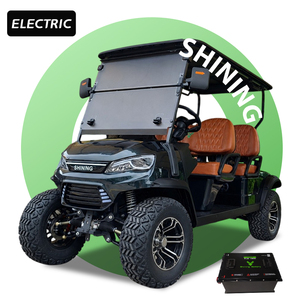
Integrated with 4-wheel hydraulic disc braking systems, DOT/GCC certified, built for high duty-cycle transport.
Send an Inquiry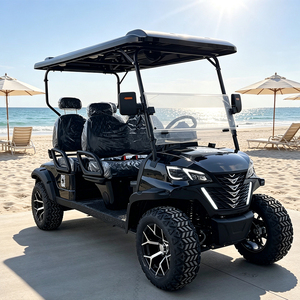
Optimized with fade-resistant ceramic friction pads for resort, municipal, and commercial campus operations.
Send an Inquiry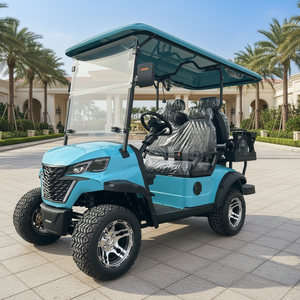
500kg rated payload capacity equipped with high-mu semi-metallic friction pads for steep incline hold.
Send an Inquiry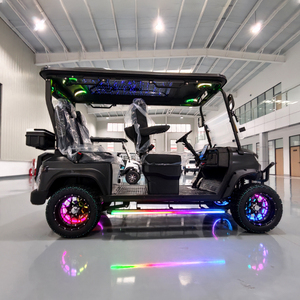
EEC certified dual-circuit hydraulic braking system with anti-corrosion coated steel backing plates.
Send an Inquiry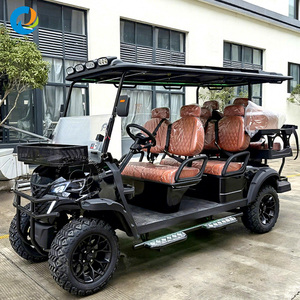
Features low-wear friction materials and regenerative braking integration for extended range efficiency.
Send an Inquiry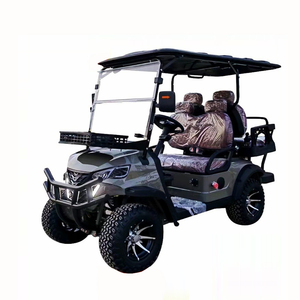
Engineered for low maintenance TCO, utilizing noise-damped dual-rubber shim brake pad technology.
Send an Inquiry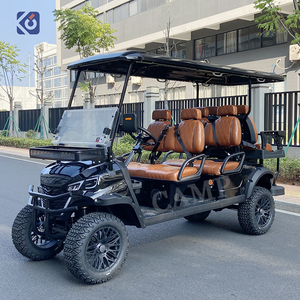
Heavy duty braking system calibrated for continuous eco-resort and sightseeing transport duty cycles.
Send an Inquiry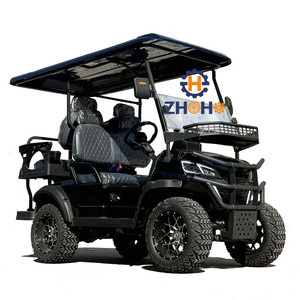
Premium NVH-damped ceramic friction pads delivering whisper-quiet braking response and zero dust creation.
Send an InquiryAn In-Depth Engineering Overview of Modern Friction Material Synthesis, Tribological Performance, and OEM Quality Validation Protocols.
Custom compounding utilizing synthetic graphite, aramid fibers, potassium titanate, and non-ferrous minerals. Formulated to maintain stable friction coefficients ($\mu = 0.35 - 0.45$) under operating temperatures ranging from -40°C to +650°C.
Eliminating high-frequency brake squeal ($>2\,\text{kHz}$) through multi-layer constrained layer damping (CLD) shims, precision chamfering, radial slots, and high-pressure scorching processes that eliminate uncured volatile binder gases.
Employing patented mechanical hook retention matrix systems on steel backing plates to ensure zero shear failure between the friction material and backing plate under extreme heavy-duty emergency braking stops.
A comparative engineering breakdown for OEM procurement directors and tier-1 automotive suppliers.
| Formulation Type | Friction Coeff ($\mu$) | Thermal Fade Temp | Rotor Wear Impact | Noise Index | Primary OEM Application |
|---|---|---|---|---|---|
| Non-Asbestos Organic (NAO) | 0.32 – 0.38 | 350°C | Ultra Low | Silent (< 5 dB) | Passenger Sedans, Light Duty EVs |
| Premium Ceramic | 0.38 – 0.44 | 550°C | Very Low | Whisper Quiet | Luxury Vehicles, Fleet & Golf LSVs |
| Low-Metallic (Low-Met) | 0.40 – 0.48 | 650°C | Moderate | Low to Medium | European OE Spec, Performance Vans |
| Semi-Metallic (Semi-Met) | 0.38 – 0.52 | 750°C | Moderate / High | Requires Damping Shims | Heavy Trucks, Commercial Utilities |
| Carbon-Ceramic Matrix | 0.45 – 0.58 | 900°C+ | Negligible | Engineered NVH Tuned | High-Performance Sports & Racing |
Global environmental mandates, notably Washington State's Better Brakes Law and California Senate Bill 346, have enforced strict caps on copper usage in friction materials down to less than 0.5% by weight. As an enterprise OEM/ODM Brake Pads Manufacturer, our engineering teams have pioneered copper-free ceramic and organic friction matrices using advanced synthetic graphite lattices, basalt mineral fibers, and engineered titanate structures. This transition maintains superior thermal dissipation and shear strength while ensuring 100% compliance with international EPA NSO (Non-Sparking/Eco) guidelines without sacrificing pedal feel or rotor lifespan.
The rapid electrification of passenger cars, low-speed golf carts, and commercial utility transport vehicles introduces unique tribological challenges. Electric vehicles rely heavily on regenerative braking, leaving the mechanical friction brake pads disengaged for long stretches. This infrequency of use increases the risk of surface rust formation on rotor surfaces, leading to friction binder degradation, pad seizure, and premature corrosion glazing. Our ODM formulations for EV platforms utilize specialized hydrophobic coating resins and zinc-nickel plated backing plates that resist atmospheric moisture oxidation while maintaining high initial friction coefficient ($\mu_0$) even after prolonged thermal inactivity.
Upcoming Euro 7 standards directly regulate brake wear particle emissions ($PM_{2.5}$ and $PM_{10}$) for the first time in automotive history. Our state-of-the-art LINK R&D dynamometers incorporate real-time aerosol spectrometer sampling hoods during SAE J2707 wear sequences. By optimizing grain sizing distributions and binder cross-linking density during hot pressing, our latest low-dust ceramic compounds achieve up to a 68% reduction in airborne wear debris compared to standard low-metallic OE references.
To guarantee zero-defect acoustic performance, every bespoke ODM friction compound undergoes rigorous SAE J2521 dynamometer squeal matrix testing. This protocol subjects the brake assembly to thousands of brake applications under varying oil temperatures ($20^\circ\text{C}$ to $300^\circ\text{C}$), humidities, and deceleration pressures. Coupled with Krauss friction stability testing, our quality control ensures that cold-bite, hot-fade, and moisture-recovery benchmarks exceed rigid OEM factory specifications.
End-to-end ODM/OEM capabilities engineered to reduce lead times, elevate build quality, and lower overall total cost of ownership.
Rapid prototype development for custom backing plates within 14 days. Automated fine-blanking presses ensure dimensional accuracy to within $\pm 0.05\,\text{mm}$.
Utilizing high-pressure positive molding machines that apply uniform compaction force across the entire friction surface, eliminating density variations and internal micro-cracks.
Complete turn-key ODM packaging solutions including laser etching part codes on backing plates, custom color boxes, hardware kit integration, and barcode labeling.
Full regulatory compliance with ECE R90, AMECA, and ISO certifications. Strategic shipping support for FOB, CIF, DDP to over 65 international port destinations.
Essential answers for sourcing engineers, procurement executives, and fleet maintenance buyers.
For existing standard tooling shapes, our baseline MOQ is 500 sets per part number. For fully custom ODM projects requiring dedicated backing plate die development and custom friction compounding, our typical minimum volume starts at 1,000 to 2,000 sets per production batch, depending on backing plate complexity and material specification.
We employ a three-tier noise attenuation strategy: 1) Optimizing friction material natural frequencies through precise mineral formulation; 2) Engineering multi-layer nitrile-rubber vulcanized stainless steel damping shims; and 3) Utilizing precise slotting and chamfer geometries validated via SAE J2521 dynamometer acoustic matrix testing.
Yes. Many of our core passenger and commercial brake pad formulations are already ECE R90 certified by recognized European testing authorities (such as VCA or TÜV). For custom client-owned formulations, we manage the full ECE R90 homologation process on your behalf.
Every production batch undergoes strict quality control validation before factory release. Each shipment is accompanied by a Certificate of Analysis (COA) containing density checks, Rockwell hardness ratings, shear strength test results (ISO 6312), and Chase/Krauss dynamometer friction coefficient curve maps.
Our heavy-duty semi-metallic and low-metallic formulations utilize heat-resistant phenolic resins combined with thermal-stabilizing graphite matrices. This enables friction pads to withstand continuous temperatures up to 650°C without experiencing catastrophic thermal fade or binder breakdown, maintaining linear stopping power under full load conditions.
Initial prototype samples for new backing plate geometries are completed within 14–21 business days. Upon sample sign-off and testing approval, full-scale mass production orders typically complete within 30 to 45 calendar days depending on packaging complexity.
Whether you require private label ceramic brake pads, custom EV fleet friction tooling, or high-volume OE production lines, our engineering team is ready to deliver tailored technical solutions.