Explore our heavy-duty, high-comfort driver and passenger seating assemblies engineered for golf carts, utility equipment, construction machinery, and specialized commercial fleets.
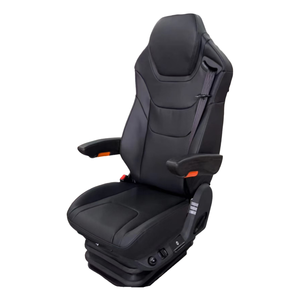
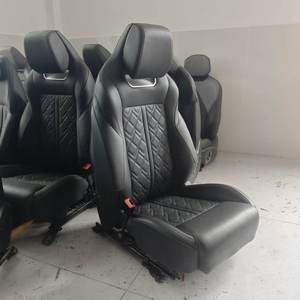
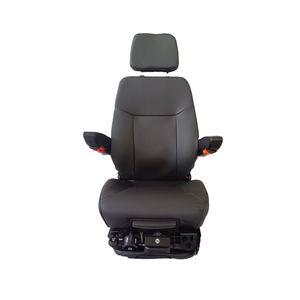
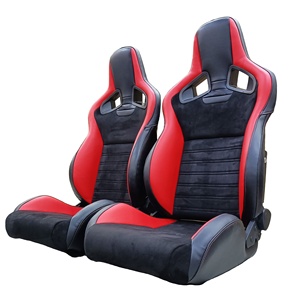
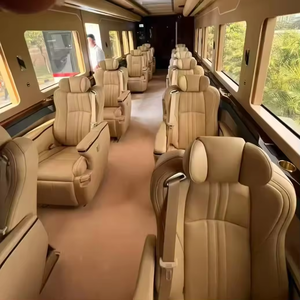
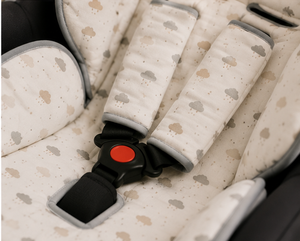
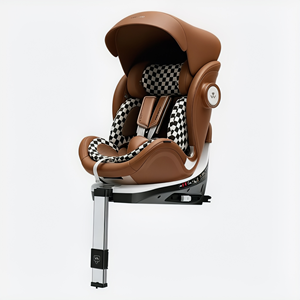
In the modern commercial electric vehicle (EV) and utility cart sector, seating assemblies are no longer passive components; they represent a fundamental intersection of vehicle ergonomics, operator health, environmental resilience, and brand differentiation. Commercial procurement directors, original equipment manufacturers (OEMs), and original design manufacturers (ODMs) face stringent demands when selecting seating manufacturing partners. High-duty cycle applications—ranging from multi-passenger resort shuttles and golf fleets to heavy construction equipment and off-road utility vehicles—require seating systems designed to withstand continuous micro-vibrations, extreme ultraviolet (UV) exposure, hydrolysis, and heavy physical impacts without structural degradation.
As a leading OEM/ODM Cart Seats Manufacturer & Factory, our manufacturing methodology integrates high-density polyurethane cold-cure molding, robotically welded high-tensile steel framing, and marine-grade vinyl upholstery engineering. By leveraging custom tooling design, rapid prototyping, and automated assembly workflows, we enable brand partners to deploy custom seating architectures optimized for structural endurance and operator comfort.
Utilizing high-resilience (HR) cold-cure molded polyurethane foam with a target density of 55–65 kg/m³. Prevents permanent foam deformation under prolonged load while providing optimal vibration damping.
Heavy-duty PVC and premium micro-fiber synthetic leathers treated with UV-inhibitors (Xenon Arc test 1000+ hours), anti-microbial coatings, and 100% waterproof heat-sealed seam technology.
E-coated structural steel and lightweight reinforced fiberglass composites engineered to meet ISO 6683 structural strength and FMVSS 207/210 safety retention standards.
Material science is central to our quality assurance. Standard off-the-shelf cut foam degrades within 12 to 18 months of intensive outdoor usage, resulting in user fatigue and vinyl sagging. Our factory exclusively utilizes in-situ cold-cure polyurethane foam molding, where chemical components are injected directly into custom-machined aluminum tooling. This process creates an outer skin integral to the foam core, delivering consistent support curves that align with human spinal biomechanics and distributing pelvic pressure evenly during long operating cycles.
Our factory adheres to international testing metrics to guarantee long-term durability across diverse operational environments:
| Performance Indicator | Standard Commercial Grade | Dingkong OEM / Industrial Grade | Testing & Compliance Protocol |
|---|---|---|---|
| Foam Density Core | 28 – 35 kg/m³ (Cut Sheet) | 55 – 65 kg/m³ (Cold-Cure Molded) | ASTM D3574 / ISO 3386 |
| Abrasion Resistance | 20,000 – 30,000 Cycles | 100,000+ Martindale Rubs | ASTM D4966 / ISO 12947 |
| UV Degradation Shield | 300 Hours Exposure | 1,000+ Hours Xenon Arc Exposure | SAE J2527 / ISO 4892-2 |
| Frame Corrosion Resistance | 24-Hour Salt Spray | 500+ Hour Cathodic E-Coat Salt Spray | ASTM B117 / ISO 9227 |
| Waterproofing Barrier | Surface Water Resistant | 100% Heat-Sealed Hydrophobic Seams | AATCC 127 Hydrostatic Pressure |
As global fleet operators transition toward electrified commercial low-speed vehicles (LSVs), modular utility platforms, and high-end personal transportation vehicles (PTVs), seat procurement strategies are evolving rapidly. B2B purchasers and OEM engineers must align their product development roadmaps with several key industry shifts over the coming decade:
1. Modular Assembly Architectures: Modern fleet managers demand versatility. OEM seating systems are moving toward modular base-plate designs where a single chassis mount can accept standard bucket seats, bench seats with integrated flip-flop cargo beds, or specialized suspension-equipped driver seats. This modularity drastically reduces inventory SKU counts and simplifies assembly line operations for vehicle manufacturers.
2. Smart Seat Integration & Climate Control: High-end golf cart fleets, resort shuttles, and commercial vans are rapidly adopting thermal comfort options. Integrated Positive Temperature Coefficient (PTC) heating grids, dual-zone micro-ventilation fans, and occupant-presence safety sensors (N.O./N.C. seat switches) are becoming standard requirements in global RFQs. Integrating these electrical components directly into the molding process ensures IP67 water ingress protection.
3. Sustainable & Circular Materials: Environmental, Social, and Governance (ESG) mandates are transforming material specifications. Future-ready factories are replacing traditional petroleum-based polyols with bio-based soy polyols, and adopting 100% recyclable thermoplastic polyurethane (TPU) covers and eco-conscious cotton muslin liners. These advancements maintain mechanical durability while significantly reducing the carbon footprint of manufacturing.
4. Advanced Ergonomics & Custom Branding: End-users view seating quality as a primary indicator of overall vehicle luxury and craftsmanship. Custom OEM tooling now incorporates multi-density zones (softer thigh support with firm lateral bolsters), geometric heat-embossed pattern textures, laser-cut stitching lines, and direct-molded custom corporate logos on backrest handles.
Building on established industrial capabilities—such as those proven in heavy equipment, custom utility vehicles like Kodiak EV platforms, and specialized commercial automotive seats—our factory offers vertical integration from design concept to mass delivery.
Full 3D modeling, finite element analysis (FEA), and rapid CNC mold tooling enable customized prototype turnaround in as little as 14 business days.
Precision computer-controlled sewing machines and robotic welding arms deliver uniform seam tension, structural integrity, and flawless stitch aesthetics.
Scalable production lines capable of supporting small-batch custom runs (100–500 units) up to high-volume continuous production (50,000+ units/month).
Our quality control protocols follow a zero-defect policy. Every production lot undergoes rigorous testing, including dynamic impact fatigue testing, cyclic load deformation, environmental chamber testing (-40°C to +85°C), and water jet washdown resistance. This rigorous evaluation guarantees that every seat assembly leaving our facility maintains peak performance across harsh environments worldwide.
Get clear, expert answers to key engineering, minimum order quantities (MOQs), tooling customisation, and regulatory compliance queries.
For standardized model configurations or stock upholstery colors, our standard MOQ starts at 50 to 100 units. For fully customized OEM/ODM projects requiring bespoke aluminum foam tooling, unique frame stamping, or custom-embossed vinyl textures, the standard initial run MOQ is 300 to 500 units. We also support prototype sample production prior to mass production commitments.
Yes. Our engineering department develops seating assemblies to comply with international vehicle standards, including ECE R16 / ECE R17 for child safety restraint compatibility and structural retention, FMVSS 207/210 for seat belt anchorage integrity, and ISO 6683 for earth-moving and construction machinery seat operator protection.
We utilize marine-grade synthetic vinyl materials embedded with specialized UV stabilizers that withstand over 1,000 hours of continuous Xenon Arc light testing. To prevent water ingress into the foam core, we apply dielectric high-frequency heat sealing over stitching seams, hydrophobic under-layers, and closed-cell skinning techniques on our molded polyurethane foam.
Once 3D CAD drawings are finalized and approved, preliminary tool development (molds and welding fixtures) takes approximately 20 to 30 calendar days. First-article Golden Samples are delivered within 10 days post-tooling. Mass production turnaround generally ranges from 25 to 35 days depending on total order volume and custom material requirements.
Absolutly. We regularly integrate OEM electrical wire harnesses, waterproof seat occupancy safety switches (normally open / normally closed), low-voltage 12V/48V/72V PTC heating elements, and active ventilation blower units directly into the seat sub-structure for seamless plug-and-play integration with the vehicle wiring loom.
Yes. We offer multiple branding methods including high-precision multi-color embroidery, direct heat-embossing, laser etching, and custom metal or plastic backrest grab handles. Custom color matching for vinyl and contrast stitching is available via Pantone or RAL color references.
Partner with a certified OEM/ODM factory dedicated to superior ergonomics, advanced material performance, and reliable global supply chain execution. Request a competitive wholesale quote or schedule a consultation with our engineering team today.
Get a Quote