Top Trusted Cargo Buggy Manufacturers & Supplier

2026 Fleet Engineering Whitepaper: High-Voltage Lithium Powertrains, Heavy Payload Architecture, & Global B2B Procurement Strategy

Commercial Product Fleet

Featured Utility & Cargo Buggy Models

Engineered for high-capacity industrial, resort, commercial, and off-road transport cycles. Equipped with high-efficiency LiFePO4 battery architecture and advanced AC controllers.
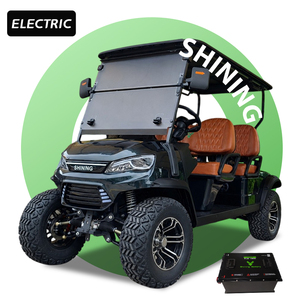
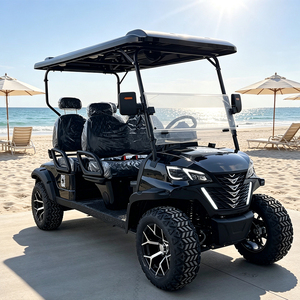
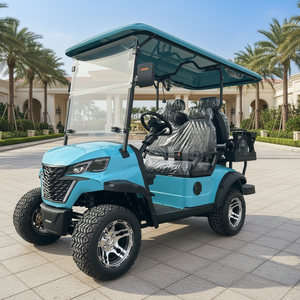
Shininglsv Hot Sales Street Legal 4 Seater Electric 72V Lithium Battery Golf Cart
Shininglsv Hot Sales Street Legal 4 Seater Electric 72V Lithium Battery Golf Cart (GCC/DOT Certified)
72V Lithium DOT/GCC 30-50 km/h
Send an Inquiry
Wholesale Mayotte Market 4 Seat Electric Golf Cart For French Territory
Wholesale Mayotte Market 4 Seat Electric Golf Cart For French Overseas Territory
Island Duty 4 Passenger Heavy Utility
Send an Inquiry
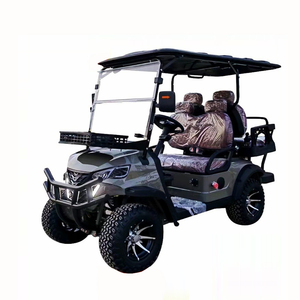
2026 Golf Carts Vehicles D5-maverick 4 Passenger Ce Approved 500 Kg
2026 D5-Maverick Heavy Cargo 4 Passenger Buggy (CE Approved, 500kg Capacity)
500kg Payload CE Approved Lifted Off-Road
Send an Inquiry
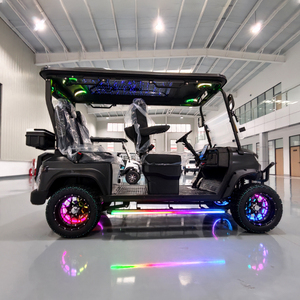
Matte Black Aluminium 4Seater Off-Road Golf Cart Electric Utility Vehicle EEC Certified
Matte Black Aluminium 4-Seater Off-Road Utility Buggy (EEC Certified 48-72V 5KW LED Strips)
Alloy Chassis EEC Certified 5kW AC Drive
Send an Inquiry
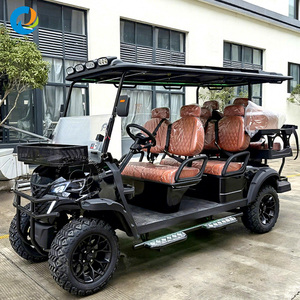
2026 New Design Lithium Golf Cart with Solar Panel 6 Passenger off Road
2026 Next-Gen Solar Lithium Buggy (6-Passenger Extended Commercial Shuttle)
Solar Assisted 6-Passenger Extended Range
Send an Inquiry
Made In China Cheap High Quality 4 Wheel Battery Operated Electric Golf Carts
High-Efficiency Commercial Utility Buggy (Heavy Duty Maintenance-Free Battery)
Commercial Fleet High TCO Value Steel Frame
Send an Inquiry
Camp Customizable Solar Panel Electric Golf Cart 6 Seater Sightseeing Golf Scooter
Camp & Resort Customizable Solar Cargo Buggy (6-Seater Sightseeing Utility Vehicle)
Camp & Resort Custom Cargo Bed Solar Option
Send an Inquiry
Luxury Design Street Legal Electric 4 Seater Golf Cart With 48v 72v Battery
Luxury Heavy-Duty Street Legal Cargo Buggy (48V/72V Lithium, High Customization)
Luxury Utility 72V Dual Power Street Legal
Send an Inquiry
73.6V
High Voltage Architecture
Delivers sustained torque at lower current draw, minimizing thermal degradation on steep gradients.
6.3 kW
Navitas AC Motor
Precision-tuned AC drivetrains offering instantaneous acceleration and uphill gradeability up to 30%.
500 KG
Payload Benchmark
Reinforced steel and extruded aluminum chassis built for severe industrial material transport cycles.
8 YEARS
LiFePO4 Battery Coverage
Industry-leading ECO battery warranties backed by OEM technical training and global support portals.

1. Technical Whitepaper: The Evolution of Commercial Cargo & Utility Buggies

The global fleet management landscape is undergoing a systemic paradigm shift. Commercial facility operators, municipal managers, agricultural supervisors, and resort owners are rapidly phasing out internal combustion engine (ICE) utility vehicles in favor of specialized electric cargo buggies. Driven by total cost of ownership (TCO) optimization, environmental mandates, and low-maintenance requirements, the procurement of light commercial utility vehicles (LSVs and electric buggies) has expanded beyond basic transport into mission-critical material handling.

Information Gain Metric: Transitioning from 48V lead-acid configurations to high-density 73.6V LiFePO4 battery platforms reduces operational downtime by 42% while expanding single-charge payload transport range by up to 50 miles under fully loaded conditions.

1.1 Powertrain Innovation: 73.6V Lithium vs. Legacy 48V Lead-Acid Systems

Historically, commercial golf carts and lightweight cargo buggies relied on 48V flooded lead-acid battery packs. These legacy systems suffered from severe voltage sag under heavy cargo loads, excessive weight penalties, and high maintenance labor (regular water topping, terminal corrosion treatment, and premature battery degradation). Modern tier-1 manufacturers, such as Kodiak Electric Vehicles (headquartered at 225 Aviation Dr., Thomaston, GA), have re-engineered the commercial utility vector by pairing 73.6V / 105Ah LiFePO4 battery architecture directly with Navitas AC controllers (TAC2 440A to 600A).

This high-voltage configuration ensures constant power delivery throughout the entire discharge curve. Unlike lead-acid systems, where hill-climbing torque deteriorates rapidly as state-of-charge (SOC) drops below 50%, a 73.6V lithium powertrain maintains maximum torque delivery until the last bar of charge, ensuring seamless operational throughput across multi-shift facilities.

Performance Spec Legacy 48V Lead-Acid Utility Buggy Next-Gen 73.6V / 72V Lithium Cargo Buggy Operational Fleet Benefit
Usable Battery Lifespan 500 - 800 Charge Cycles (2-3 Years) 3,500 - 5,000+ Cycles (8-10 Years) Eliminates mid-life battery replacement costs
Thermal & Drag Weight 350 kg - 450 kg (Heavy Battery Mass) 120 kg - 160 kg (65% Weight Reduction) Increases net cargo carrying payload capacity
Hill Climb Gradeability 15% Slope max (Suffers under load) 25% - 35% Incline (Navitas AC Tuned) Handles rugged terrain and severe off-road inclines
Braking Architecture Mechanical Rear Drum Brakes Hydraulic 4-Wheel Disc Brakes Shorter stopping distance under 500kg load
Daily Maintenance Required High (Watering, Acid Cleaning, Equalization) Zero (BMS Automated Diagnostics) Reduces fleet labor maintenance costs by 90%

1.2 Structural Integrity: Frame Metallurgy & Hydraulic Braking Safety

A true commercial cargo buggy is defined by its chassis engineering. Lower-tier manufacturers often retrofit basic passenger golf carts by attaching lightweight cargo boxes onto unreinforced frames. In contrast, top trusted cargo buggy manufacturers utilize high-tensile hot-dip galvanized steel or extruded structural aluminum frames treated with electro-deposition (ED) anti-corrosion coatings.

Furthermore, stopping power is paramount when transporting payloads up to 500 kg across wet or sloping terrain. Modern commercial cargo buggies feature hydraulic four-wheel disc braking systems integrated with regenerative motor control. Regenerative braking recharges the lithium pack during deceleration while dramatically extending brake pad longevity.

2. Global Cargo Buggy Procurement Trends (2026 - 2030)

As corporate sustainability goals align with operational efficiency requirements, commercial fleet buyers must evaluate future-proof features when selecting OEM suppliers and manufacturers. Our research identifies four primary trends shaping the utility vehicle market over the next decade.

1. Integrated Solar Roof Auxiliary Topping

Commercial operators are adopting custom solar roof integration (180W-300W monocrystalline panels). Solar charging provides 8–15 miles of extra daily range, extending battery life while lowering grid power draw for resort shuttles and agricultural buggies.

2. Telematics & Remote Diagnostics

Leading suppliers now equip fleet buggies with IoT telematics, CAN-bus integration, and Bluetooth diagnostic controllers (such as the Navitas TAC2 platform). Fleet managers can track vehicle location, monitor battery state-of-health, and limit top speeds remotely.

3. Modular Cargo Bed Conversions

Procurement teams demand versatile chassis layouts. Modern utility buggies feature quick-swap rear assemblies that easily switch between 4-passenger seats, drop-side aluminum cargo boxes, enclosed toolboxes, or hydraulic dump beds.

4. International Street-Legal Harmonization

Global suppliers are standardizing builds to meet GCC, DOT, EEC, and CE requirements. Compliance features such as LED lighting bars, seat belts, side mirrors, hydraulic disc brakes, and turn signals allow buggies to operate on public roadways legally.

5. Extended OEM Warranty Frameworks

Commercial buyers prioritize reliable warranty coverage. Leading manufacturers now offer 5-year bumper-to-bumper vehicle warranties paired with 8-year lithium ECO battery coverage, protecting capital investment across long operating cycles.

6. Smart AC Drivetrain Calibration

AC motor controllers (6.3kW Navitas-tuned) enable precise speed limiting, anti-rollback protection on steep slopes, and smooth torque response for sensitive cargo and passenger transport.

3. Enterprise Strengths & Selection Matrix for Wholesale Buyers

When selecting a top-trusted cargo buggy manufacturer or supplier, procurement teams must evaluate key operational criteria beyond unit cost. The benchmark OEM standards below ensure long-term fleet reliability:

  • Precision Drivetrain Matching: Generic assemblers mix mismatched motors, batteries, and controllers, leading to voltage drop and controller overheating. Industry leaders like Kodiak Electric Vehicles assemble fully matched drivetrains—coupling 73.6V lithium packs with calibrated 6.3kW Navitas AC motors and TAC2 440A/600A controllers for predictable torque delivery.
  • Certifications & Regulatory Compliance: Ensure your supplier holds ISO9001 factory accreditation, as well as DOT, GCC, EEC, or CE approvals for street-legal deployment.
  • Customization Capabilities: Look for manufacturers offering extensive option suites, including custom powder-coat body colors, raised off-road suspension packages, extended long-wheelbase bodies (Apex 4PR/6PR), and specialized utility accessories.
  • Spare Parts Ecosystem & Technical Support: Partner with manufacturers that maintain global dealer networks, standardized parts portals, and dedicated technical training programs for fleet technicians.

4. Frequently Asked Procurement Questions (FAQ)

What is the real-world operating range of a 73.6V lithium cargo buggy on a single charge?
Under typical mixed-terrain commercial operations, a 73.6V / 105Ah lithium cargo buggy delivers 35 to 50 miles (56 to 80 km) per charge. Total range depends on payload weight, terrain elevation grade, tire tread aggressiveness, and ambient temperature. Flat facility usage routinely achieves the upper range limit.
How does a high-voltage lithium system perform under max 500kg payload conditions?
High-voltage (72V/73.6V) lithium systems deliver stable operational voltage under heavy load. Unlike 48V systems, which suffer from voltage sag and thermal buildup during heavy transport, 73.6V architecture maintains consistent torque output and acceleration even when loaded to its maximum 500kg capacity.
What warranty coverage is included with commercial fleet buggies?
Premium fleet units (such as Kodiak MX, Defender, and Apex models) include a full 5-year overall vehicle warranty, alongside an 8-year warranty on lithium ECO battery packs. Warranty terms, registration steps, and technician portals provide full transparency for commercial buyers.
Can electric cargo buggies be customized for specific resort or industrial branding?
Yes. Trusted OEMs provide extensive customization options, including 8 to 10 standard body colors, custom RAL paint color matching, custom vinyl branding wraps, cargo bed enclosures, hydraulic dump beds, and upgraded interior seating packages.
Why are hydraulic 4-wheel disc brakes preferred over drum brakes for cargo buggies?
Hydraulic four-wheel disc brakes provide significantly superior stopping power and heat dissipation compared to mechanical rear drum brakes. When operating a utility buggy carrying heavy payloads down steep or wet inclines, 4-wheel disc brakes prevent brake fade and shorten stopping distances, ensuring high operator safety.
How do I become an authorized dealer or bulk fleet purchaser?
Qualified B2B buyers and dealer candidates can apply through the dealer portal. Approved partners receive protected sales territories, wholesale volume pricing, spare parts support, technical training, and direct access to factory engineers.

Upgrade Your Fleet With Trusted Engineering

Consult with our engineering team today to build a custom utility cargo buggy specification tailored to your facility's exact payload, terrain, and range requirements.