Explore heavy-duty, street-legal, and off-road electric golf buggies built with high-torque AC motors and maintenance-free lithium battery technology.
 GCC/DOT Certified
 Export Spec
 CE Approved
 EEC Certified
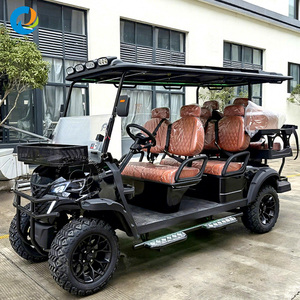 Solar Assisted
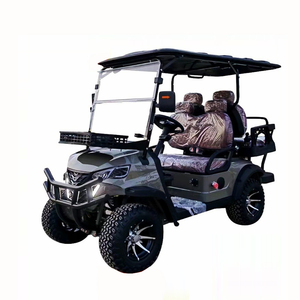 Fleet Standard
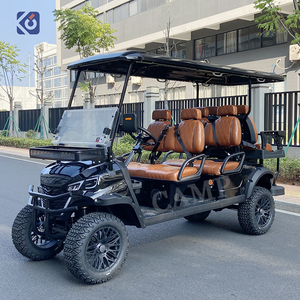 Resort Custom
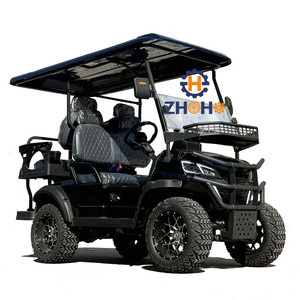 Luxury Custom
The global commercial utility vehicle market is experiencing a structural migration from legacy internal combustion engines (ICE) and standard lead-acid battery platforms toward high-voltage, AC-driven 73.6V lithium utility buggies. Commercial buyers—ranging from multi-course golf management corporations and luxury hospitality resorts to industrial facilities and municipal transport fleets—require strict engineering metrics for procurement: extended operational range, maintenance-free thermal safety, programmable torque control, and rapid ROI through minimized Total Cost of Ownership (TCO).
When selecting tier-1 utility buggy manufacturers, purchasing directors must audit structural integrity, electrical component integration, chassis corrosion resistance, and regulatory compliance (including DOT street-legal certifications, GCC export standards, and EEC homologation). Suppliers like Kodiak Electric Vehicles (based in Thomaston, Georgia) set benchmark metrics by integrating high-output 6.3kW Navitas AC motors, heavy-duty 4-wheel hydraulic disc brakes, and long-term 5-to-8 year chassis and battery warranties into standard commercial configurations.
Traditional electric golf buggies powered by 48V flooded lead-acid batteries suffer from thermal decay, frequent water replenishment requirements, corrosive acid spill risk, and severe voltage degradation when climbing gradients. In contrast, next-generation commercial utility buggies integrate sealed, maintenance-free LiFePO4 (Lithium Iron Phosphate) chemistry engineered directly to communicate with programmable AC controllers.
Operates at lower current draws compared to legacy 48V systems, significantly reducing system heat, resistance losses, and motor stress while maintaining constant terminal voltage through 95% of discharge.
Integrated 440A to 600A Navitas TAC2 controllers provide real-time Bluetooth diagnostics, regenerative braking calibration, variable acceleration curves, and speed governor locks for fleet security.
Replaces mechanical drum brakes with heavy-duty hydraulic calipers on all four wheels, reducing full-payload stopping distances by up to 45% on wet turf or 20% paved inclines.
| Performance Metric | Commercial 73.6V Lithium Buggy (Kodiak Spec) | Conventional 48V Lead-Acid Cart | Operational Impact |
|---|---|---|---|
| Battery Cycle Life | 3,500 – 5,000+ Cycles (LiFePO4 Chemistry) | 500 – 800 Cycles (Flooded Lead Acid) | 6x longer lifespan; avoids replacement costs |
| Daily Maintenance | Zero Maintenance (Sealed Unit) | Weekly water topping, terminal cleaning | Saves ~45 labor hours per cart annually |
| Chassis Payload Mass | Approx. 120-150 lbs total battery weight | Approx. 380-450 lbs battery weight | Significantly reduces turf compaction & stress |
| Charge Efficiency | Fast Charge (0-100% in 2.5 - 3.5 Hours) | Slow Charge (8 - 10 Hours) | Enables multi-shift operation via quick top-ups |
| Uphill Torque Curve | Constant speed up to 25% incline angle | Dramatic speed reduction & battery drain | Prevents slowdown under heavy payload/passengers |
Built bold at 225 Aviation Dr., Thomaston, Georgia, Kodiak Electric Vehicles represents the gold standard in commercial utility buggy manufacturing. By combining precision US assembly with globally certified components, Kodiak delivers fleet solutions engineered for heavy resort shuttle duty, off-road property management, and municipal applications.
Key structural and operational strengths built into the Kodiak manufacturing ecosystem include:
Emerging technology, clean energy policies, and IoT connectivity are transforming how utility buggies are specified, monitored, and managed globally.
Integration of flexible, high-efficiency solar cells onto utility buggy roofs allows continuously trickle-charging lithium packs during daytime operation. This extends total daily driving range by 15-20% and reduces facility grid charging reliance in remote resorts and outdoor venues.
Modern commercial fleets are moving toward real-time cellular and GPS telematics. Fleet operators can remotely track vehicle locations, monitor battery state-of-health (SOH), enforce geofenced speed zones, and schedule automated maintenance alerts via dealer software API integration.
Commercial buyers increasingly demand street-legal compliance. Utility buggies fitted with seat belts, automotive glass windshields, side mirrors, turn signals, high-beam LED lighting, and VIN certification permit seamless travel across municipal roads and mixed-use master-planned communities.
Fleet versatility is maximized through quick-interchange rear modules. A single utility buggy platform can switch between a 2-passenger cargo dump box for groundskeeping in the morning and a 4-passenger luxury shuttle for guests in the afternoon.
Before issuing a Purchase Order (PO) to utility buggy manufacturers or wholesale suppliers, global procurement officers should perform a comprehensive technical audit based on five core criteria:
Detailed technical answers addressing common procurement, technical, and fleet operation questions.
Kodiak utility buggies equipped with a 73.6V / 105Ah lithium pack deliver a typical range of 35 to 50 miles (56 to 80 km) per charge under mixed commercial duty cycles. Real-world range varies depending on passenger load, terrain incline grade, ambient temperature, tire pressure, and driving speed. On flat paved cart paths, light fleet usage frequently achieves range performance above 50 miles.
Hydraulic 4-wheel disc brakes utilize fluid pressure to clamp brake pads against steel rotors on all four wheels simultaneously. This delivers uniform stopping power, reduces pedal effort, and dramatically decreases stopping distance—especially when hauling 4-6 passengers or heavy cargo on steep slopes or wet grass. Traditional drum brakes only actuate on the rear wheels and require frequent manual adjustment to maintain cable tension.
Kodiak provides comprehensive multi-year coverage tailored to commercial operators. The Kodiak MX platform features a full 5-year bumper-to-bumper vehicle warranty. On Defender and Apex models equipped with Lithium ECO power systems, the battery pack is backed by an industry-leading 8-year manufacturer warranty. Terms cover cell degradation below specified thresholds, controller failure, and frame structural integrity.
Yes. Kodiak offers extensive OEM customization options for resort fleets, corporate campuses, and municipality vehicles. Bodies can be finished in up to 10 standard colors or color-matched custom paint formulas. Additional factory options include branded vinyl wraps, custom embroidered luxury seat cushions, elevated off-road suspension lift kits, front utility baskets, soundbars, and integrated solar roof panels.
Navitas AC systems eliminate wear-prone motor brushes, delivering higher electrical efficiency, greater thermal dissipation, and higher peak torque across all speed ranges. Furthermore, Navitas TAC2 controllers enable programmable regenerative braking—recharging the lithium battery every time the driver decelerates or descends hills while minimizing brake pad wear.
Utilizing a standard high-output smart lithium charger, a complete 0% to 100% charge cycle requires approximately 2.5 to 3.5 hours. Because lithium batteries have no memory effect, fleet operators can perform partial opportunity charges during lunch breaks or shift changes without degrading cell longevity.
Prospective dealer partners can apply via the Kodiak Dealer Application portal. Approved dealers gain access to protected geographic sales territories, wholesale fleet pricing models, dedicated dealer portal administration, marketing collateral, spare parts dispatch, and direct technical service training.